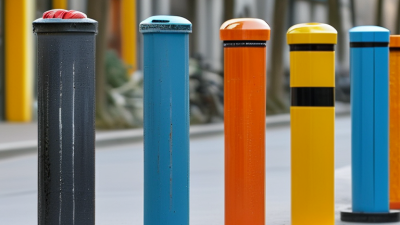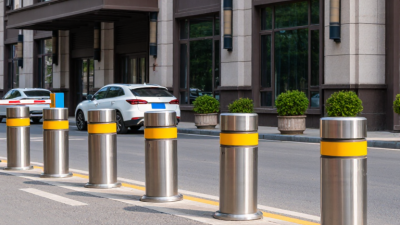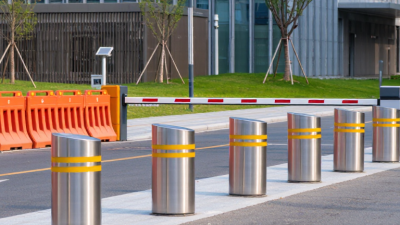
Choosing China’s best Security Bollards for sale takes more than comparing prices, finishes, and delivery promises. Buyers need to understand what each model can actually withstand. The evidence matters.
The U.S. National Highway Traffic Safety Administration estimated 40,901 traffic fatalities in 2023 in its Early Estimate of Motor Vehicle Traffic Fatalities report. That figure describes road deaths, not attacks on buildings. It still highlights why vehicle movement and pedestrian protection deserve careful planning. FEMA’s Reference Manual to Mitigate Potential Terrorist Attacks Against Buildings (FEMA 426) also treats vehicle access and perimeter protection as practical design concerns.
For impact-rated products, look for documented testing and clear performance classifications. ASTM F2656/F2656M and IWA 14-1 describe crash-test methods for vehicle security barriers. A rating is not a promise that every installation will perform identically. Soil, foundations, spacing, vehicle approach, and installation quality all matter. Small details count.
Security technologist Bruce Schneier wrote, “Security is a process, not a product.” That principle fits bollard selection: a strong post cannot replace a complete site assessment. This guide compares key types, materials, ratings, and supplier questions for buyers seeking Security Bollards from China. It also flags a common weakness: product pages may show polished steel and bold claims, yet omit the test report or installation conditions. Ask for the underlying documents. Then check whether the proposed layout suits the actual entrance, pavement, and daily traffic. A little skepticism is useful.
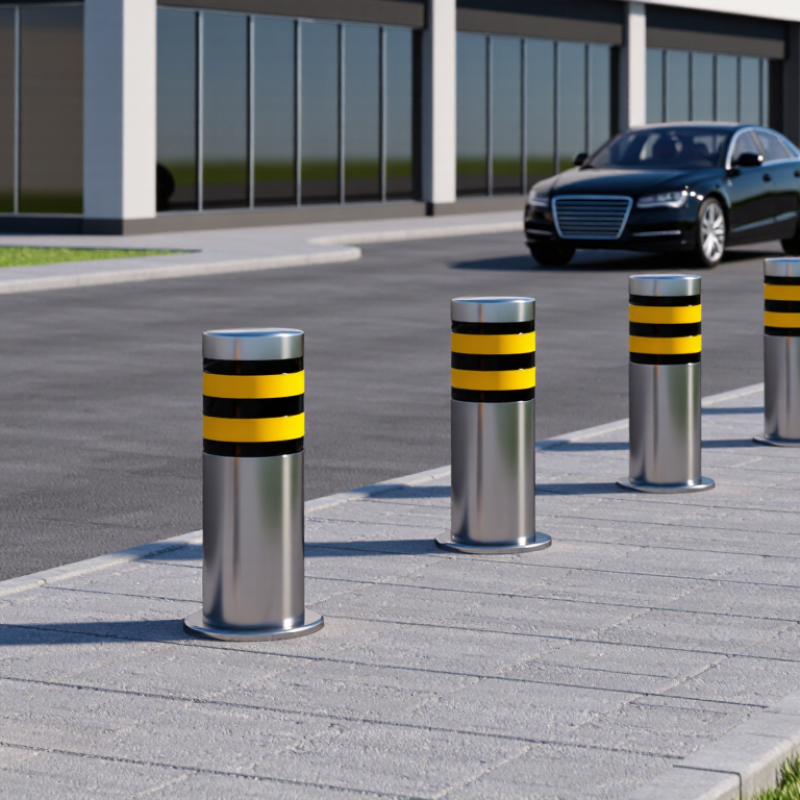
Security bollards are short, sturdy posts that control vehicle access and help protect people, entrances, and equipment. Their purpose is practical: block or guide vehicles while keeping pedestrian routes clear. A row beside a pavement can define a safe walking area without building a wall. Bollards are not a substitute for a complete site security plan.
Fixed bollards suit locations needing constant protection, such as building fronts, public squares, and utility areas. Removable models work where occasional vehicle access is needed, like a service lane that opens for deliveries. Retractable bollards can suit controlled entrances, but they need reliable power, drainage, and regular maintenance. A neglected mechanism may become the weakest point.
Match the type to traffic patterns and the level of vehicle risk. Busy loading areas may need stronger, impact-tested systems, while a small shop entrance may only need clear access control. Check spacing, pavement construction, visibility, and access for emergency or service vehicles before installation. Looks can deceive. A site walk often reveals turning paths or underground services that a plan misses. I have seen layouts that looked tidy on paper but narrowed the walking route in practice. Small details matter. Confirm performance requirements with a qualified security or civil engineering professional, and review the finished installation on site.

ASTM F2656 ratings help buyers compare vehicle impact performance using a defined test method. In the M30 and M50 tests, a 15,000-pound vehicle approaches the barrier at 30 or 50 miles per hour, respectively. The rating describes tested performance under specific conditions; it is not a promise that every installation will behave identically. That distinction matters.
A bollard’s rating is only one part of a site’s protection plan. Ask for the full test documentation, including the vehicle penetration result and installation details. Then compare those details with the actual site: soil strength, foundation depth, pavement thickness, bollard spacing, and available setback. A strong-looking post can underperform if its foundation is unsuitable. Small details matter.
M50-rated equipment may be appropriate for higher-speed risks, while M30 may fit other locations. The right choice depends on a documented threat assessment, not just the largest number on a product sheet. Check whether the tested configuration matches the proposed model and layout. Also consider access needs, drainage, and routine maintenance. I would not assume a test rating alone settles the decision; site conditions can be messy, and plans sometimes need revision.
A bollard plan should begin with the vehicle, its approach, and the point it must protect—not a standard spacing diagram. ASTM F2656/F2656M-20 crash testing includes an M50 test using a 15,000-pound vehicle at 50 mph. That benchmark helps define a threat, but it does not guarantee identical performance at every site.
Layout matters. Place bollards across likely vehicle paths, including entrances and service lanes, while keeping pedestrian routes clear. Measure clear gaps carefully: a wide opening beside a building can undermine a strong barrier line. FEMA’s Risk Management Series report, Site and Urban Design for Security (FEMA 430), emphasizes assessing site conditions and threats when shaping protective design. The ground matters too. Foundations need to suit soil, drainage, nearby utilities, and the tested barrier system. A shallow footing in loose or saturated soil may not behave like the test installation.
Start with a site survey. Mark approach lanes, turning areas, slopes, and underground services. Then match the tested impact rating and foundation details to the assessed vehicle threat. Leave room for maintenance and emergency access. Small details count. In practice, drawings can miss buried pipes or seasonal soil changes; confirm them before construction. No layout is perfect, and that uncertainty deserves a second review.
China Best Security Bollards for Sale?
A supplier’s test report is useful only when it matches the bollard being quoted. Check the model, dimensions, steel grade, test setup, and reported result. Details matter. Ask whether the report identifies the foundation and anchor arrangement, since these can affect performance. A certificate alone may not show how the product behaves in your actual installation.
Compare materials with the site in mind. Request the steel grade, wall thickness, corrosion-protection method, and weld inspection details. For coastal or frequently washed areas, ask how the finish is tested and maintained. Photos help, but they cannot confirm material quality. A small sample or independent inspection may provide better evidence, though it adds time and cost.
Read warranty terms before comparing prices. Confirm the coverage period, parts and labor, exclusions, claim process, and expected response time. Ask whether damage to coatings, anchors, or moving parts is covered. Get it in writing. Some specifications will still leave questions; that is a reason to request clarification, not assume every supplier uses the same test conditions.
| Comparison Dimension | What to Request from Each Supplier | How to Check the Evidence | Supplier A | Supplier B |
|---|---|---|---|---|
| Crash-test rating | State the tested standard, vehicle mass, impact speed, and penetration result for the offered bollard system. | For ASTM F2656/F2656M claims, check the report for the impact-test rating and the exact tested configuration. A rating applies to the tested setup, not automatically to every bollard model. | Enter report details | Enter report details |
| Test report traceability | Request the complete report, including report number, test date, laboratory, model identification, and photographs or diagrams of the test setup. | Confirm that the model, dimensions, foundation, and installation details in the report match the quotation. Verify the report with the issuing laboratory when necessary. | Record and verify | Record and verify |
| Tested installation | Request foundation drawings and installation instructions corresponding to the crash-tested product. | Compare embedment, concrete foundation, reinforcement, spacing, and ground conditions with the report. Changes to these details can affect performance. | Enter drawing reference | Enter drawing reference |
| Steel specification | Ask for the steel grade and applicable material standard for the bollard body, plate, and other load-bearing parts. | Check mill test certificates or material certificates against the quoted grade and component. Do not treat “stainless steel” or “heavy-duty steel” alone as a complete specification. | Enter grade and documents | Enter grade and documents |
| Corrosion resistance | Request the stainless-steel grade or the carbon-steel coating system, with coating thickness and surface-preparation details where applicable. | Match the material and finish to the site environment. 316 stainless steel generally offers better resistance to chloride exposure than 304; neither grade removes the need for suitable design and maintenance. | Enter material and finish | Enter material and finish |
| Dimensions and construction | Obtain a dimensioned drawing showing height, outside diameter or width, wall thickness, base details, and operating components. | Compare the drawing with the required clear opening, vehicle access needs, and tested configuration. Confirm whether dimensions refer to the exposed section or the complete unit. | Enter drawing reference | Enter drawing reference |
| Finish and maintenance | Request finish options, cleaning guidance, inspection intervals, and replacement-part availability. | Compare the written maintenance requirements and identify which parts are consumables. For powered or retractable bollards, request operating and service documentation too. | Enter finish and terms | Enter finish and terms |
| Warranty coverage | Request the warranty period and written terms separately for the bollard body, coating, hydraulic or electrical components, and installation work. | Check start date, covered defects, exclusions, labor and freight responsibility, claim procedure, and remedies. Warranty periods and coverage are supplier-specific; there is no single universal term. | Enter written terms | Enter written terms |
| Quotation and scope | Ask for an itemized quotation identifying the model, quantity, accessories, packaging, delivery terms, and any installation or commissioning services. | Compare equivalent product configurations and clearly separate included items from optional items. Confirm the quotation validity and the agreed delivery location and trade terms. | Enter quotation reference | Enter quotation reference |
| Final comparison | Record the evidence received for each requirement before ranking suppliers. | Prioritize verifiable test evidence and a matching installation design; then compare material documentation, written warranty scope, and total quoted scope. | Evidence reviewed: Yes / No | Evidence reviewed: Yes / No |
Buyer note: Supplier columns are intentionally left for verified quotation and document details. Do not infer crash performance, material grade, or warranty coverage from marketing descriptions alone.
China Best Security Bollards for Sale?
How to Select China Bollards Using Compliance and Site Requirements
Selecting bollards from China starts with the site, not the catalogue. Map vehicle entrances, pedestrian routes, emergency access, and the likely impact direction. Then check local building, fire-access, and accessibility requirements; approvals vary by location. ASTM F2656/F2656M classifies vehicle-barrier crash tests by vehicle mass and speed. For example, an M30 rating represents a 15,000-pound vehicle tested at 30 mph; M50 uses the same vehicle at 50 mph. These ratings help compare tested performance, but they do not guarantee identical results after installation.
Tips: Request the full crash-test report, including penetration rating, vehicle type, and foundation details. Confirm the supplied bollard spacing and embedment match the tested setup. A strong post with a different footing may perform differently. On site, check buried utilities, drainage, soil conditions, and space for concrete foundations. A tape measure and utility survey can prevent expensive redesign.
For imported products, verify material specifications, corrosion protection, finish, and installation drawings before ordering. Ask whether testing came from an accredited laboratory, and confirm that the report identifies the exact assembly being offered. I would recheck delivery tolerances too; small layout errors can obstruct access or leave gaps. That detail is easy to miss.
Use the required impact-test level as a starting point when comparing bollards for a site. ASTM M-ratings indicate the nominal test speed in miles per hour; the chart converts those speeds to kilometres per hour.
An M-rating alone does not establish suitability. Confirm the applicable standard and penetration rating, tested vehicle details, installation requirements, and site-specific risk with the project engineer.