Leave Your Message
China Top 10 Road Bollard Suppliers for Global Buyers offers a practical starting point for safer streets, controlled access, and protected pedestrian areas. The World Health Organization’s Global Status Report on Road Safety 2023 estimates that approximately 1.19 million people die in road crashes each year. That figure gives simple street hardware a serious purpose. A correctly specified bollard can protect a shopfront, guide vehicles, or separate a cycle lane from moving traffic.
Market research from Grand View Research and MarketsandMarkets shows continued investment in road safety equipment, urban infrastructure, and vehicle-access control. However, market growth does not automatically prove product quality. Buyers should inspect steel grade, wall thickness, reflective visibility, foundation details, impact-test documentation, surface treatment, and replacement procedures. A photograph is not evidence. A low price can also hide weak anchoring or poor drainage design.
Jean Todt, former United Nations Secretary-General’s Special Envoy for Road Safety, has stated, “Road safety is a shared responsibility.” His point matters when comparing Chinese suppliers with global project requirements. Reliable manufacturers should explain load conditions, installation tolerances, climate resistance, and delivery capacity in clear technical language. They should also provide traceable test reports, not vague claims about “heavy duty” performance.
This guide compares ten Chinese suppliers for international buyers. It considers manufacturing experience, customization, certifications, communication, and after-sales support. Yet no ranking can replace a site assessment. Soil conditions differ. So do traffic patterns, local standards, and maintenance budgets. That uncertainty deserves attention, because even a well-made Road Bollards system can fail when its foundation or placement is poorly planned.
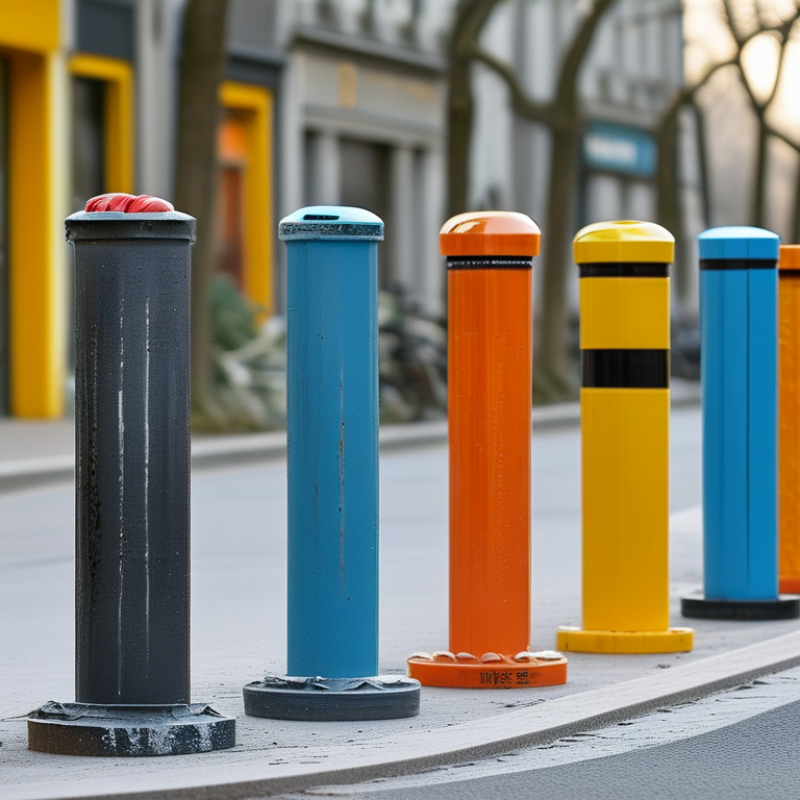
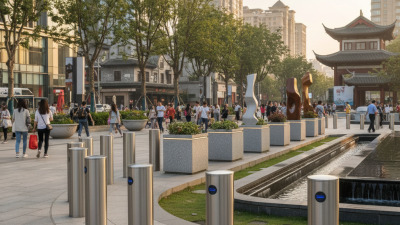
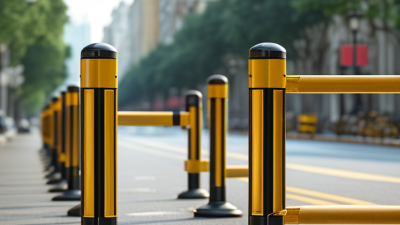
Road bollards are short, durable posts that guide traffic and protect people, buildings, and road edges. They can be fixed, removable, flexible, reflective, or automatically retractable. Engineers select them according to impact risk, visibility, maintenance needs, and local road conditions.
Their importance is clear. The World Health Organization’s Global Status Report on Road Safety 2023 estimates 1.19 million annual road deaths worldwide. Properly positioned bollards can separate vehicles from pedestrians, protect loading zones, and reduce accidental access to restricted areas. They are not a complete safety solution. Poor spacing, weak foundations, and low night visibility can still create hazards.
China attracts global buyers through concentrated metalworking, plastics processing, surface treatment, and export logistics. The World Bank’s Logistics Performance Index 2023 ranked China 19th globally, supporting more predictable international supply chains. Industry procurement reports also show growing demand for road safety and traffic management equipment as cities invest in safer urban mobility. Buyers can compare custom dimensions, reflective films, anchoring systems, corrosion resistance, and test documentation in one sourcing market. Price is only one factor.
A low-cost bollard may fail early.
Experienced buyers should request material certificates, impact-test evidence, salt-spray results, installation drawings, and sample approval. ISO 9001 certification can support process consistency, but it does not replace product testing. One practical weakness deserves attention: supplier catalogs often look stronger than field performance. Independent inspection and clear acceptance criteria remain necessary before shipment.
Road bollards are short, robust posts used to control vehicle access, protect pedestrians and buildings, separate traffic areas, and improve roadside visibility. The table below presents ten anonymized supplier profiles based on common China-manufactured road-bollard product categories and typical export specifications. Technical values are shown as practical market ranges and should be confirmed against the final product drawings and test reports.
| Supplier Profile | Primary Bollard Type | Typical Material | Common Dimensions | Visibility & Finish | Typical Protection Features | Relevant Standards or Tests | Typical Application | Indicative MOQ | Indicative Production Lead Time | Why Global Buyers Consider China |
|---|---|---|---|---|---|---|---|---|---|---|
| Profile 01 | Fixed security bollard | Carbon steel pipe with welded base plate | Diameter: 114–168 mm Height: 600–1,200 mm Wall: 3–6 mm |
Powder coating, galvanized finish, or reflective band | Concrete foundation fixing; optional tamper-resistant fasteners | Material certificate; coating thickness inspection; dimensional inspection | Storefronts, pedestrian zones, parking entrances | 50–100 units | 25–40 days | Broad steel-processing capacity and flexible custom fabrication |
| Profile 02 | Removable security bollard | Stainless steel 304 or 316 | Diameter: 89–168 mm Height: 600–900 mm |
Brushed, mirror-polished, or powder-coated surface | Ground sleeve, locking pin, and removable post design | Stainless-steel grade verification; salt-spray or corrosion assessment | Hotels, residential entrances, loading-control areas | 30–80 units | 30–45 days | Multiple stainless-steel finishing options and relatively low customization barriers |
| Profile 03 | Automatic rising bollard | Painted or galvanized steel housing with stainless-steel post | Post diameter: 219–275 mm Visible height: 500–800 mm |
Reflective tape, LED ring, or traffic-grade coating | Hydraulic, electromechanical, or pneumatic drive; emergency lowering option | Ingress-protection testing; cycle testing; electrical safety testing | Commercial compounds, government facilities, controlled vehicle gates | 2–10 systems | 35–60 days | Integrated mechanical, electrical, and control-system manufacturing |
| Profile 04 | Manual telescopic bollard | Galvanized steel or stainless steel | Diameter: 76–114 mm Height: 500–900 mm |
Powder coating with red-and-white or yellow reflective markings | Key lock, padlock provision, or gas-assisted lifting mechanism | Load and operating-cycle inspection; corrosion-resistance assessment | Small car parks, private roads, service lanes | 20–50 units | 20–35 days | Cost-effective standard models and small-batch OEM production |
| Profile 05 | Flexible polymer traffic bollard | UV-stabilized polyurethane, PVC, or recycled polymer blend | Diameter: 80–150 mm Height: 450–1,000 mm |
High-visibility yellow, orange, or red body with reflective collars | Impact recovery; flexible hinge or embedded spring base | UV-aging evaluation; impact recovery test; dimensional inspection | Traffic islands, lane separation, temporary work zones | 100–500 units | 20–35 days | Competitive injection molding and color-customization capability |
| Profile 06 | Lighted pedestrian bollard | Aluminum alloy, stainless steel, or galvanized steel | Diameter or width: 100–220 mm Height: 600–1,200 mm |
LED module, powder coating, anodizing, or brushed metal | IP-rated enclosure; replaceable LED or integrated lighting module | Ingress-protection test; electrical safety test; photometric verification | Walkways, campuses, parks, public plazas | 20–100 units | 30–50 days | Combined lighting, metalwork, and private-label packaging services |
| Profile 07 | Solar-powered road delineator bollard | UV-resistant polymer body with aluminum or steel base | Width: 100–250 mm Height: 600–1,200 mm |
Reflective sheeting with flashing or steady LED warning light | Solar panel, rechargeable battery, dusk-to-dawn controller | Battery-capacity test; charging test; weather-resistance evaluation | Rural roads, temporary diversions, low-energy traffic projects | 100–300 units | 30–50 days | Established supply chains for solar modules, batteries, LEDs, and housings |
| Profile 08 | Heavy-duty anti-ram bollard | Thick-wall carbon steel with reinforced core | Diameter: 219–323 mm Height: 700–1,200 mm Wall: 8–20 mm |
Hot-dip galvanizing, protective paint system, or powder coating | Deep concrete foundation; welded reinforcement; impact-rated design option | Static load test; foundation review; impact-test documentation when specified | Critical infrastructure, logistics sites, airports, utility facilities | 10–30 units | 45–75 days | Heavy fabrication capacity and access to steel plate, pipe, and machining suppliers |
| Profile 09 | Decorative urban bollard | Ductile iron, cast aluminum, stainless steel, or coated steel | Diameter: 100–250 mm Height: 500–1,100 mm |
Textured powder coating, metallic finish, or custom color | Fixed, removable, or chain-linked configuration | Coating adhesion test; dimensional inspection; foundation compatibility review | Historic districts, shopping streets, public landscaping | 50–200 units | 35–60 days | Access to casting, CNC machining, finishing, and custom tooling services |
| Profile 10 | Traffic-control bollard with chain or barrier fittings | Steel, stainless steel, or recycled polymer | Diameter: 76–114 mm Height: 750–1,200 mm |
Reflective bands, high-visibility paint, or stainless finish | Eyelets, chain hooks, base flanges, or socket-mounted installation | Dimensional inspection; weld inspection; coating or corrosion evaluation | Queue management, pedestrian routes, parking control | 50–150 units | 25–45 days | Wide accessory selection, scalable production, and export-oriented logistics |
Buyer verification checklist: Confirm post diameter, wall thickness, foundation depth, impact-performance requirements, corrosion protection, lighting or control voltage, ingress-protection rating, installation drawings, packaging, inspection procedures, and the destination country’s applicable road-safety and electrical regulations before placing an order.