10 Best Road Bollards for Security and Safety
Choosing the right Road Bollards is a practical decision, not a simple search for the strongest product. Bollards guide vehicles, protect pedestrians, and define safer movement around entrances, walkways, loading areas, and public spaces. The wrong choice may block access, create trip hazards, or provide less protection than expected.
This guide reviews 10 best Road Bollards for security and safety. Each option deserves attention for construction quality, visibility, installation method, maintenance needs, and intended use. Steel models can offer dependable resistance in demanding areas. Flexible polymer bollards may suit locations where occasional vehicle contact is possible. Removable and retractable designs can provide controlled access without permanently closing a route. Reflective bands, contrasting colors, and solar lighting also matter when rain or darkness reduces visibility.
Details matter.
Reliable selection begins with the site itself. Measure vehicle paths, pedestrian clearances, surface conditions, drainage, and emergency access requirements. Product information should clearly state materials, dimensions, testing results, and installation guidance. Reputable suppliers should provide consistent technical documentation, not vague promises. Professional installers can also identify weak foundations or poor spacing before they become expensive problems.
No single bollard fits every property. A visually impressive model may still fail in a busy delivery zone. A low-cost option may require frequent replacement. This review aims to balance protection, appearance, durability, and practical value. Some judgments remain subjective, especially when budgets and design preferences differ. Still, careful comparison can reduce uncertainty and support a safer, more reliable decision.
What Road Bollards Are and How They Improve Security
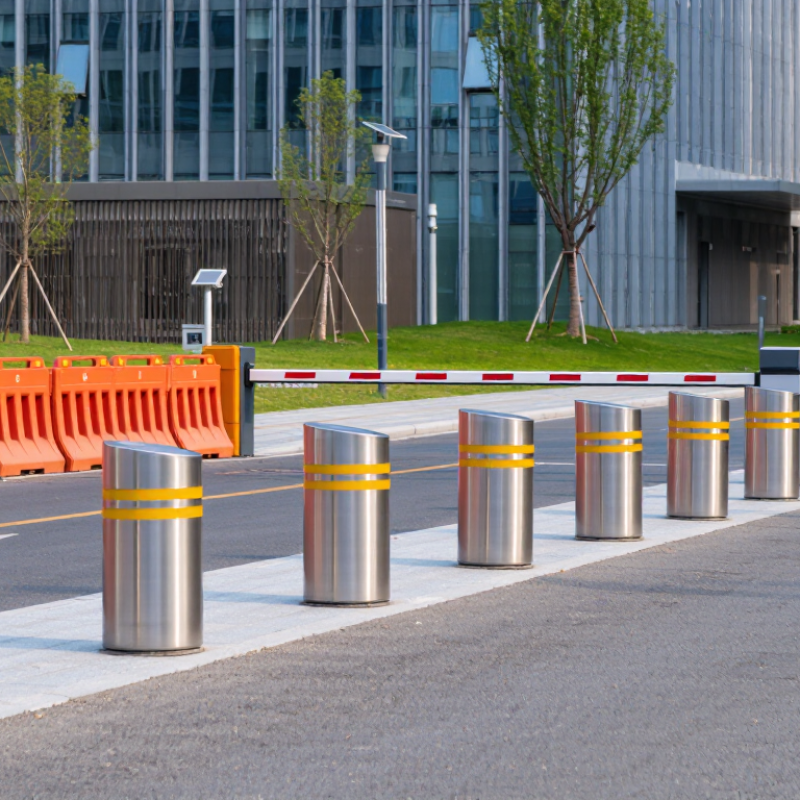
Road bollards are short, strong posts placed beside roads, entrances, walkways, and building fronts. They guide vehicles while protecting people and vulnerable structures. Some are fixed, while others fold, retract, or absorb impact. Their purpose depends on the site, traffic level, and required access.
A well-planned bollard line can prevent accidental vehicle movement toward crowded entrances. It can also keep delivery areas, cycle paths, and emergency routes clearly separated. Steel bollards often provide durable protection, while flexible models suit spaces needing frequent access. Reflective bands improve visibility at night, especially near wet asphalt or poor lighting. Placement matters. Posts set too close together may block pedestrians, wheelchairs, or maintenance equipment. Posts set too far apart may leave unsafe gaps.
In practice, security improves when bollards work with lighting, signs, cameras, and sensible traffic design. Installation should consider underground services, drainage, soil strength, and vehicle turning space. Professional assessment is valuable because surface appearance alone can hide structural problems. A heavier bollard is not automatically better. It may create hazards for cyclists or complicate emergency access. This is where planning can fall short. Even experienced teams sometimes focus on impact resistance and overlook daily movement. Regular inspections should check loosened fixings, corrosion, fading reflectors, and damaged foundations. Small defects can become expensive failures.
Key Types of Bollards for Roads, Entrances, and Public Areas
Road bollards do more than block vehicles. They guide movement, protect pedestrians, and define safer boundaries around entrances and public areas. Fixed steel bollards suit permanent protection beside doors, sidewalks, and loading zones. Their strong foundations matter as much as the posts. Poor installation can weaken an otherwise capable barrier.
Removable bollards provide controlled access for service roads, event spaces, and emergency routes. They can be lifted from ground sockets when vehicles need passage. Retractable bollards offer a cleaner solution for busy entrances. Manual models suit occasional access, while powered models support frequent movement. Flexible plastic bollards absorb minor contact and help separate lanes without creating harsh hazards. Reflective bands or internal lighting improve visibility during rain, darkness, and winter glare. Keep it visible.
In field assessments, I look at vehicle paths, pedestrian flow, turning space, drainage, and maintenance access before selecting a type. A crowded entrance may need short spacing, while a public plaza may require wider pedestrian clearance. Impact-rated products should match the expected risk, not simply the highest available rating. No bollard solves every risk. I have seen layouts fail because designers focused on strength but ignored sightlines. That is an easy mistake to repeat. Regular checks should examine loose anchors, damaged coatings, blocked sockets, faded reflectors, and uneven pavement. Safety depends on the whole arrangement, not one impressive post.
10 Best Road Bollards for Security and Safety
Typical above-ground heights commonly used for different road, entrance, and public-area bollard types.
Fixed and removable security bollards are commonly installed at approximately 900–1,200 mm above ground, while retractable, flexible, and decorative models often use lower or more varied heights. Final dimensions should be selected according to pedestrian visibility, vehicle risk, accessibility, and local standards.
How to Choose the Right Bollard for Each Security Requirement
When choosing a road bollard, start with the threat, not the product image.
A pedestrian entrance needs a different barrier from a loading bay. Measure vehicle paths, turning angles, and emergency access. Fixed steel bollards suit high-impact zones. Removable models help when access changes. Retractable units preserve daily clearance, but they need disciplined maintenance. Security begins with site evidence, not guesswork.
Material and foundation determine real performance.
Thick steel can still fail when installed in weak paving. Check wall thickness, corrosion protection, anchoring depth, and drainage before ordering. Concrete foundations should match soil conditions and expected impact energy.
For coastal sites, use finishes designed for salt exposure. Ask for tested performance data, installation drawings, and maintenance intervals. Marketing language is not engineering evidence.
Visibility matters as much as strength.
Choose contrasting finishes, reflective bands, or integrated lighting where drivers approach at night. Keep spacing tight enough to discourage vehicle passage, yet wide enough for wheelchairs and service equipment. Confirm the layout with a scaled drawing and an on-site walk-through.
Site reviews often reveal strong bollards placed too close to corners, creating avoidable blind spots. That detail is easy to miss. Review access during rain, darkness, and deliveries.
The best selection balances resistance, usability, appearance, and repair cost.
There is rarely a perfect choice; a careful compromise is often safer.