Leave Your Message

Why Choose Street Bollards for Global Projects?

Why Choose Street Bollards for Global Projects?

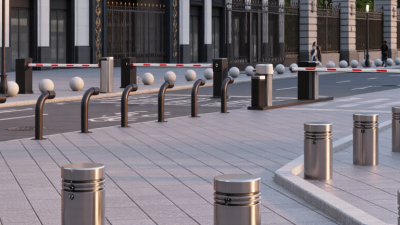
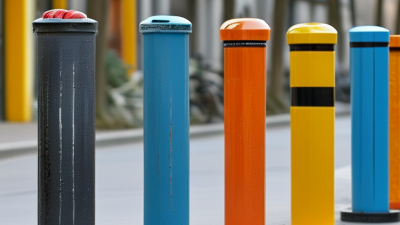
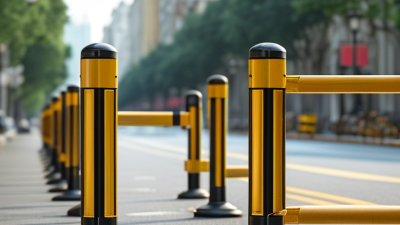
Street Bollards are becoming essential elements in safer, clearer, and more adaptable public spaces. They guide vehicles, protect pedestrians, and define boundaries without creating heavy visual barriers. Their value becomes especially clear in airports, retail streets, transport hubs, campuses, and mixed-use developments.

Urban-design expert Jan Gehl said, “First life, then spaces, then buildings.” This principle applies directly to Street Bollards. A successful project should begin with pedestrian movement, local behavior, emergency access, and long-term maintenance. Bollards should support these needs, not simply fill empty pavement. Their height, spacing, visibility, impact resistance, and surface finish require careful evaluation. A stainless-steel model may suit a coastal promenade, while a galvanized finish may perform better near industrial roads. The correct choice depends on climate, traffic patterns, installation depth, and maintenance capacity.

Global projects need more than attractive products. They need consistent performance across different environments. Reliable suppliers provide test data, installation guidance, replacement parts, and project documentation. Local engineers should also confirm ground conditions and accessibility requirements. One detail is often underestimated: poor spacing can create hazards for wheelchairs, bicycles, or service vehicles.

No product is universally perfect. That assumption deserves review. Some projects over-specify protection and under-consider daily usability. Others choose low-cost bollards that later require frequent repairs. A measured approach is stronger. When design evidence, field experience, and responsible manufacturing work together, Street Bollards can protect people while preserving the character of a place.
Why Choose Street Bollards for Global Projects?

Street Bollards Defined: Urban Safety Assets for Global Public Spaces

Why Choose Street Bollards for Global Projects?

Street Bollards Defined: Urban Safety Assets for Global Public Spaces

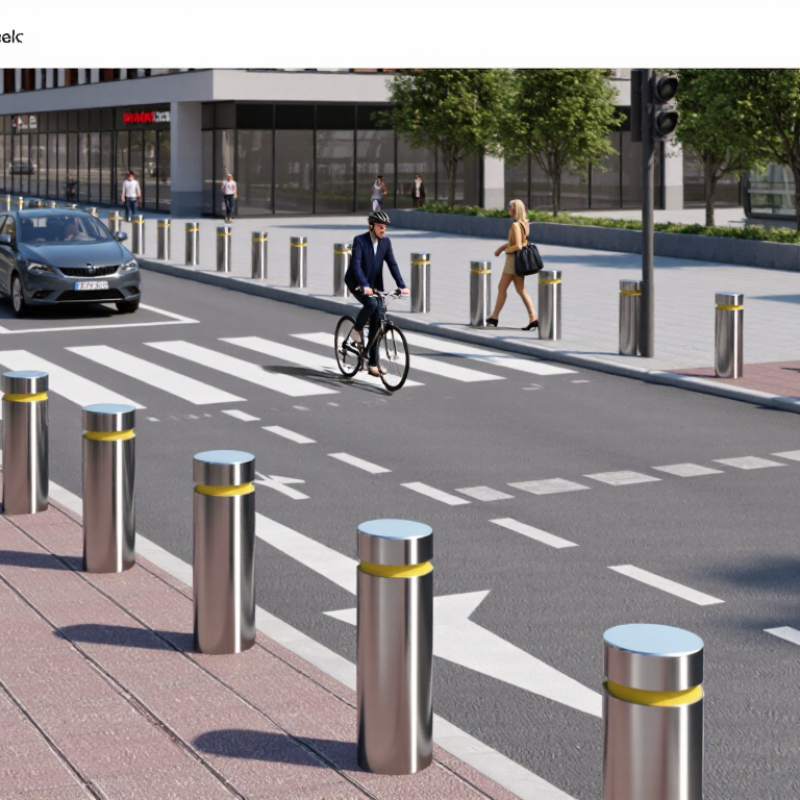
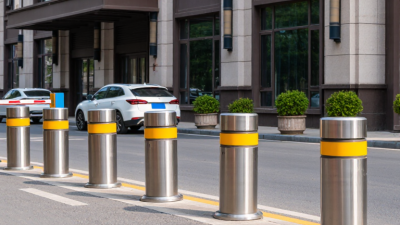
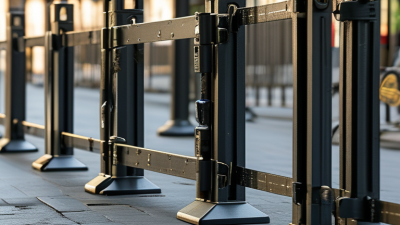
Street bollards are fixed or removable posts that help protect people, buildings, and traffic zones. They guide movement without creating a heavy visual barrier. In public spaces, their value depends on careful placement, not appearance alone. Experienced planners study vehicle paths, pedestrian flow, emergency access, and local accessibility requirements. Materials such as galvanized steel, stainless steel, or reinforced concrete suit different climates and maintenance plans. Reflective bands improve visibility near crossings, especially during rain or low light. Small details matter.

A reliable bollard layout should leave enough room for wheelchairs, strollers, bicycles, and service vehicles. Impact-rated models may protect entrances, outdoor seating, and busy transit areas. However, ratings must match the site risk and local engineering standards. Drainage, foundation depth, corrosion exposure, and replacement access also deserve attention. A strong design can still fail when installation is rushed. No layout is perfect. Designers should review real movement patterns after opening and adjust where needed.

Tips: Keep bollard spacing consistent, but never assume one measurement fits every street. Use contrasting finishes near pedestrian routes. Check underground utilities before excavation. Create a maintenance schedule for loose fixings, damaged coatings, and poor visibility. Ask local users what feels confusing or unsafe. Their feedback may reveal problems drawings missed.
Why They Matter: 1.19 Million Annual Road Deaths and Pedestrian Risk

Why Choose Street Bollards for Global Projects?

Every year, about 1.19 million people die in road crashes, according to the World Health Organization. Pedestrians remain highly exposed, especially near crossings, transit stops, schools, and busy retail streets. A vehicle can climb a kerb within seconds. Well-positioned street bollards create a visible physical boundary between traffic and walking space. They can protect entrances, guide movement, and reduce accidental vehicle intrusion without blocking emergency access when planned correctly. Their value depends on spacing, impact performance, visibility, and local street design. A strong product alone cannot solve a weak layout.

Tips: Start with a site risk assessment. Measure kerb widths, turning paths, drainage, lighting, and pedestrian flows. Use reflective details where night visibility is poor. Keep accessible routes clear and maintain consistent bollard spacing. Confirm the design with qualified transport and accessibility professionals. Local standards still matter.

Global projects also face different climates, materials, and maintenance skills. Stainless steel may suit coastal areas, while protective finishes can support harsher environments. Yet assumptions can fail. A design tested in a quiet plaza may perform differently beside a crowded market. Regular inspections should check loosened foundations, corrosion, damaged surfaces, and obstructed walking paths. Small failures matter. A leaning bollard can become a trip hazard, while excessive placement may make a street feel hostile. The best approach combines tested protection with human-scale planning and honest review after installation.

Why Choose Street Bollards for Global Projects?

Why They Matter: 1.19 Million Annual Road Deaths and Pedestrian Risk

Pedestrians, cyclists, and motorcyclists represent approximately 54% of global road traffic deaths. Street bollards can help separate people from moving vehicles, protect crossings and sidewalks, and reinforce safer access zones in public-realm projects.

Data source: World Health Organization, Global Status Report on Road Safety 2018. The latest WHO estimate reports approximately 1.19 million road traffic deaths annually. Percentages shown represent the global distribution of road traffic fatalities by road user group.

Crash Protection Standards: ASTM F2656, PAS 68, and IWA 14-1 Ratings

For global projects, street bollards must do more than define a pavement edge. They need tested resistance against vehicle impact while fitting local access, drainage, and emergency routes. Three references appear often: ASTM F2656, PAS 68, and IWA 14-1. Each describes impact performance, but they are not interchangeable labels. A procurement team should read the full test report, not only the headline rating.

ASTM F2656 records vehicle type, impact speed, and penetration distance after a controlled test. PAS 68 also assesses vehicle impact and reports key details, including vehicle mass, speed, and stopping performance. IWA 14-1 provides an international framework for describing similar vehicle security tests. The differences matter. A bollard tested with a light vehicle may not protect against a heavy truck. A shallow foundation may also change real performance. Ratings need context.

In practice, I compare the threat assessment with site geometry before selecting a solution. I check approach lanes, turning space, bollard spacing, anchor depth, and nearby utilities. Then I verify installation drawings, soil assumptions, and maintenance access. Small errors can weaken a strong test result. No rating tells the whole story. Specifications sometimes over-focus on speed while ignoring vehicle mass and penetration distance. That shortcut deserves review. Independent test evidence, competent installation, and documented inspections make protection more reliable across varied global sites.

Why Choose Street Bollards for Global Projects? – Crash Protection Standards: ASTM F2656, PAS 68, and IWA 14-1 Ratings

Comparison Dimension ASTM F2656 PAS 68 IWA 14-1 Project Relevance for Street Bollards
Geographic origin United States United Kingdom International guidance Select the rating framework requested by the project authority, security consultant, or local specification.
Document status ASTM F2656 is an active vehicle-impact test method; verify the applicable edition in the project specification. PAS 68:2013 is a British impact-test specification and should be checked against current project requirements. IWA 14-1:2013 provides international vehicle-security barrier test and rating guidance. Always request a current, independent test report rather than relying only on a marketing description.
Primary test output Vehicle class, impact speed, and penetration category. Vehicle mass, impact speed, impact angle, and penetration distance. Vehicle type, mass, speed, impact angle, and penetration distance. Use the complete rating, not only the speed or vehicle mass, when comparing tested bollard systems.
Typical rating format M50 P1 — medium-duty truck at 50 mph with a penetration category of P1. V/7500/80/90 — 7,500 kg vehicle at 80 km/h, 90° impact angle; penetration is reported separately. V/7500R/80/90:1.5 — truck, 7,500 kg, 80 km/h, 90° impact angle, with 1.5 m penetration. A complete rating helps designers verify whether the tested configuration matches the actual site risk.
Common ASTM speed levels M30, M40, and M50 correspond to 30, 40, and 50 mph test speeds respectively. Uses speed in kilometres per hour within the rating string. Uses speed in kilometres per hour within the rating string. For international tenders, convert units carefully and retain the original test rating in project records.
ASTM penetration categories P1: up to 1.0 m; P2: over 1.0 m to 7.0 m; P3: over 7.0 m to 20.0 m; P4: over 20.0 m. Penetration is generally stated as a measured distance in metres within the test rating. Penetration is stated as a measured distance in metres within the rating. Lower penetration usually provides stronger control of hostile-vehicle movement, but must be assessed with site geometry.
Impact angle The test configuration and direction are defined in the test method and report; do not assume a single angle for every application. The rating includes an impact angle, commonly shown as 90° for a perpendicular impact. The rating includes an impact angle, such as 90° for a perpendicular impact. Review approach roads, turning movements, and possible oblique impacts before choosing bollard spacing and layout.
Vehicle mass and type Uses defined vehicle classifications, including medium-duty truck test levels such as M30, M40, and M50. Uses a vehicle designation and mass, for example 7,500 kg. Identifies the vehicle type and mass, for example a rigid truck at 7,500 kg. Match the tested vehicle to the credible threat, including delivery trucks, rigid trucks, or other site-specific vehicles.
Best use in global projects Projects written around North American specifications or ASTM-based procurement documents. Projects that specifically require a British PAS 68 rating or legacy UK security specification. Projects requiring an internationally understandable vehicle-impact rating structure. Street bollards can support consistent perimeter protection across different regions when test evidence and installation details are supplied.
Important comparison rule ASTM ratings should not be converted automatically into PAS 68 or IWA 14-1 ratings. PAS 68 ratings should not be treated as directly interchangeable with ASTM or IWA ratings. IWA 14-1 ratings should be compared using vehicle type, mass, speed, angle, and penetration together. A qualified security professional should confirm equivalency, installation conditions, foundation design, and site-specific performance requirements.
Specification checklist: Confirm the required standard and edition, tested vehicle type and mass, impact speed, impact angle, penetration result, bollard spacing, foundation details, installation surface, and the independent test report before approving a street-bollard system for a global project.

Material Selection: Galvanized Steel, Stainless Steel, and 316L Durability

Street bollards protect entrances, sidewalks, loading zones, and public spaces across different climates. Material selection determines their service life, appearance, and maintenance demands.

Galvanized steel offers practical strength for projects with controlled budgets. Its zinc coating helps resist rain, road moisture, and daily impact. Scratches can expose the steel beneath, especially near busy vehicle areas. Regular inspections remain necessary.

Stainless steel provides a cleaner appearance and stronger corrosion resistance for urban entrances, coastal promenades, and commercial sites. However, surface staining may still appear when salt deposits remain untreated. Context matters.

316L stainless steel performs better in marine environments and locations exposed to chlorides. Its low carbon content supports improved resistance around welds and harsh weather. It often suits waterfront roads, ports, and high-end public developments. Yet, higher material cost does not automatically guarantee better performance. Poor drainage, unsuitable fixings, or careless installation can reduce any material’s value.

No material is perfect.

In project reviews, engineers should examine soil moisture, salt exposure, impact risk, cleaning access, and local maintenance skills. A polished finish may demand frequent cleaning, while a galvanized surface may fit a less decorative service road.

We once underestimated splashback near a coastal driveway; the installation remained safe, but the finish aged faster than expected. That experience reinforced a simple lesson: choose the material for the environment, not only the specification sheet.

Global Planning: ADA’s 915 mm Clear Route and Lifecycle Performance

Why Choose Street Bollards for Global Projects?

Global planning begins with a clear pedestrian route. The ADA Standards require at least 36 inches, or approximately 915 mm, of continuous clear width. That dimension must remain usable after bollards, signs, drainage grates, and seasonal obstacles are installed. A route may measure 915 mm on paper yet feel narrower beside a parked vehicle. This is where careful site planning matters.

The United Nations projects that 68% of the world’s population will live in urban areas by 2050. More urban movement means greater pressure on sidewalks, crossings, and shared streets. Street bollards can define edges without creating solid barriers. Their spacing should protect pedestrians while preserving wheelchair turning space and maintenance access. The U.S. Access Board also stresses that accessible routes need stable, firm, and slip-resistant surfaces. Placement is therefore as important as bollard strength.

Lifecycle performance deserves equal attention. ISO 15686-5 recommends evaluating construction, inspection, repair, replacement, and disposal costs across an asset’s service life. Corrosion-resistant finishes, replaceable components, and visible damage indicators can reduce repeated disruption. Still, no material performs perfectly in every climate. Coastal salt, freeze-thaw cycles, and cleaning chemicals expose weak specifications quickly. A practical design should record inspection intervals, impact history, and drainage conditions. The overlooked detail is usually maintenance access. It should be designed from day one.