Why Are Road Bollards Essential for Global Buyers?
For global buyers, Road Bollards are more than steel posts beside a pavement. They are practical tools for managing vehicle access, protecting pedestrians, and shaping safer public spaces. At a busy hotel entrance, a well-placed bollard can separate a taxi lane from a crowded doorway. At a warehouse, it can protect a loading bay from accidental impact.
Duncan Bennett, a road-security specialist at ATG Access, states, “Protection works best when it is designed into the entrance, not added after an incident.” This principle matters to international buyers. Product selection should consider impact performance, visibility, installation depth, maintenance access, climate exposure, and local site conditions. Standards and test reports also deserve careful review. A polished brochure is not enough.
Road Bollards must match the real risk. Fixed models may suit permanent boundaries, while automatic or removable designs can support controlled access. Stainless steel may resist corrosion near coastal areas, but even strong materials require inspection. No bollard is perfect. Poor spacing, weak foundations, or unclear traffic planning can reduce protection. That uncomfortable detail is often missed.
Experienced buyers also examine supplier reliability. They check installation guidance, replacement parts, warranty terms, and technical support. A lower purchase price may create higher maintenance costs later. Good decisions come from evidence, not appearance alone. When design, engineering, and daily user behavior work together, Road Bollards become a dependable part of safer infrastructure.

What Are Road Bollards and How Do They Work?
Road bollards are short, sturdy posts that control vehicle movement and protect people, buildings, and equipment. They may be fixed, removable, or retractable. Each type serves a different access requirement.
Fixed bollards stay anchored in concrete and provide continuous protection. Removable models use ground sockets, allowing temporary access when needed. Retractable bollards move manually, hydraulically, or electrically. When raised, they create a visible barrier. When lowered, vehicles can pass through the controlled lane. Their effectiveness depends on more than steel thickness. Foundation depth, anchoring, spacing, drainage, and reflective visibility all matter.
Small details matter.
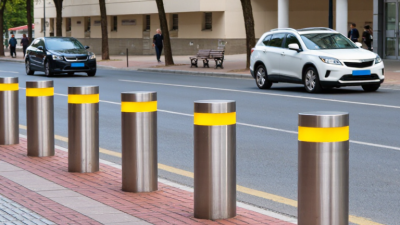
A bollard beside a loading area should remain visible in rain, darkness, and heavy traffic. High-visibility bands, rounded edges, and suitable impact resistance can reduce confusion and damage. Buyers should review site conditions, vehicle types, installation drawings, and local safety requirements before ordering. A stronger bollard is not always the better choice. Excessive resistance may damage surrounding pavement or create difficult maintenance. Field assessments often reveal simple problems, such as poor drainage or posts placed too close together. These issues are easy to overlook. Reliable performance comes from matching the bollard design with the real movement pattern, not from choosing the heaviest product.
Why Road Bollards Matter for Traffic Safety and Site Protection
Road bollards are small, but their safety role is not. They define a visible boundary between vehicles, pedestrians, cycle lanes, and building entrances. The WHO Global Status Report on Road Safety 2023 estimates 1.19 million road deaths worldwide each year. It also identifies pedestrians and cyclists as vulnerable road users. A well-positioned bollard cannot prevent every collision. It can slow vehicle access, guide attention, and protect doorways or waiting areas. That distinction matters.
For global buyers, selection should follow a documented risk assessment, not appearance alone. Check impact performance, anchoring depth, nighttime visibility, drainage, maintenance, and replacement time. The Federal Highway Administration’s Manual on Uniform Traffic Control Devices, 11th Edition, stresses consistent visibility and careful roadside placement. Poorly placed street hardware can create new hazards. At logistics sites, spacing must preserve wheelchair routes and emergency access. Local standards still control. A product suited to a pedestrian plaza may fail beside a loading bay. More protection is not always safer.
Tips:
Use reflective bands near crossings and entrances. Photograph the installation before approval. Test one zone during rain and darkness. Review turning paths with drivers and pedestrians. Keep an honest record of near misses. The evidence is not perfectly neat: bollards may protect one edge while obstructing another. That needs regular review.
Which Types of Road Bollards Suit Different Applications?
Why Are Road Bollards Essential for Global Buyers?
Which Types of Road Bollards Suit Different Applications?
Road bollards protect people, buildings, and traffic routes from accidental vehicle movement. The right type depends on impact risk, access needs, and installation conditions. Fixed steel bollards suit storefronts, sidewalks, and warehouse entrances where permanent protection is required. They provide dependable resistance, but they can obstruct maintenance vehicles. Removable bollards work better near event spaces, service lanes, and emergency access points. Their sockets need accurate alignment and regular cleaning.
Retractable bollards support controlled vehicle access at private sites, loading areas, and pedestrian streets. Manual models are practical for low-traffic locations. Automatic models suit entrances requiring frequent access control, though they need power, drainage, and scheduled servicing. Flexible plastic bollards help guide traffic and mark temporary changes. They are visible and economical, but they should not be treated as crash barriers. Decorative bollards can improve public spaces, yet appearance must never replace tested strength.
Tips: Check the bollard’s impact rating, material, visibility, and foundation requirements before ordering. Measure vehicle paths carefully. A small clearance mistake can damage doors, curbs, or the bollard itself. In coastal areas, corrosion-resistant finishes matter. In cold regions, drainage and frost protection deserve equal attention. Local standards may vary, so buyers should confirm technical documents with qualified installers. A low price can look attractive. It may hide higher maintenance costs. Real projects sometimes reveal that the “strongest” option is not the most suitable one.
How Do Buyers Compare Bollard Materials, Features, and Standards?
Why Are Road Bollards Essential for Global Buyers?
Global buyers compare bollards by material, function, and verified performance. Galvanized steel suits busy streets because its zinc coating helps resist rust. Stainless steel offers a cleaner appearance and stronger corrosion resistance near coastal areas. Aluminum is lighter, but it may need careful design for impact protection. Recycled polymer bollards can work for pedestrian guidance, though they are not suitable for every security application. No material wins every project.
Features should match the site, not just the catalog image. Buyers should check fixed, removable, or telescopic designs. Reflective bands improve visibility at night. Drainage holes, tamper-resistant fittings, and reinforced anchors also matter. For vehicle protection, request independent impact-test reports, installation details, and maintenance records. Standards differ between regions, so buyers should verify whether testing follows recognized systems such as ASTM F2656, PAS 68, or IWA 14-1. A certificate alone is not enough. The foundation, soil, vehicle type, and installation method can change the final result. This detail is often underestimated.
Tips: Compare total service life, not only purchase price. Ask for coating thickness, steel grade, warranty conditions, and replacement procedures. Check samples outdoors after rain and dust exposure. If specifications remain unclear, pause the order. A cheaper bollard may become expensive after one damaged anchor or failed coating. Mistakes happen. Careful documentation reduces them.
Why Are Road Bollards Essential for Global Buyers?
How do buyers compare bollard materials, features, and standards?
How to read this comparison: Density affects transport weight and foundation loads, while yield strength indicates the approximate stress a material can withstand before permanent deformation. Values shown are representative published values for common engineering grades: carbon steel, stainless steel 304, aluminium 6061-T6, and ductile iron. Final bollard selection should also consider impact testing, installation conditions, corrosion exposure, visibility, anchoring, and local requirements.
Relevant international references include ASTM F3016 for low-speed vehicle impact testing, PAS 68 for vehicle security barriers, and IWA 14-1 for vehicle security barriers. These documents assess the complete bollard system, including geometry, foundation, installation, and tested impact performance—not material strength alone.
What Should Global Buyers Consider Before Ordering Road Bollards?
Before ordering road bollards, global buyers should define the site’s real protection needs.
A product suitable for a shopping street may fail near a loading entrance. Check vehicle types, impact exposure, traffic speed, spacing, height, diameter, and installation depth. Measure the pavement carefully. Small errors matter. Ask for material specifications, wall thickness, corrosion resistance, and recognized test reports. Stainless steel may suit coastal areas, while coated steel can fit controlled environments. However, appearance alone proves little.
Buyers should also examine mounting methods, drainage, visibility, maintenance, and replacement procedures. Fixed, removable, and retractable designs serve different operating conditions. Confirm anchor details and foundation requirements before approval. Packaging deserves attention too. Poor protection can damage finishes during long-distance shipping. Request technical drawings, sample units, inspection records, and clear tolerances. A low purchase price may become expensive after installation changes, delays, or missing components. It is tempting to trust a catalogue image. That assumption can fail.
Tips:
Compare at least three complete quotations, not only unit prices. Ask suppliers to explain testing, coating thickness, lead time, packing, and warranty terms. Confirm whether dimensions use metric measurements. Review a sample under real lighting and inspect welds, edges, reflective areas, and surface consistency. Keep every approved drawing and written specification. A careful check now can prevent a very visible mistake later.