Leave Your Message

How to Choose Security Bollards in 2026?

Choosing Security Bollards in 2026 means balancing protection, access, appearance, and daily operations. A barrier that looks substantial may not provide a tested level of vehicle impact resistance. Start with the site: note public approach routes, vehicle access points, pedestrian paths, delivery schedules, and the distance available between traffic and buildings. Small details matter. A delivery van needs room to turn; a wheelchair user needs a clear route.

Professional guidance can help frame those decisions. The U.S. Cybersecurity and Infrastructure Security Agency’s Vehicle Ramming Mitigation guidance recommends assessing site-specific exposure and using layered protective measures. The UK National Protective Security Authority’s hostile vehicle mitigation guidance likewise emphasizes understanding vehicle approach and site conditions. For product comparisons, ASTM International’s F2656/F2656M test method evaluates vehicle security barriers through controlled impact testing. Its ratings can help buyers compare tested performance, but they do not replace a site assessment. Standards are useful. Context is essential.

In practice, ask manufacturers for current test documentation, installation requirements, maintenance guidance, and warranty terms. Check whether the specified bollard spacing suits the actual access plan, not just a drawing. Consider fixed, removable, or automatic models according to access frequency and maintenance capacity. A powered system may look convenient, yet require inspections and trained servicing. I would not treat a product rating as a guarantee for every site; that assumption deserves scrutiny. The right choice is the one whose documented performance, layout, and upkeep fit the place it protects.
How to Choose Security Bollards in 2026?

Understanding the Purpose and Types of Security Bollards

How to Choose Security Bollards in 2026?

Understanding the Purpose and Types of Security Bollards

Security bollards help manage vehicle access and protect people, entrances, and outdoor assets. Their purpose varies by location. A row outside a busy walkway may guide traffic, while posts near a building entrance can provide a stronger physical barrier. Start by identifying what needs protection and how vehicles use the area. A delivery lane has different needs from a public plaza.

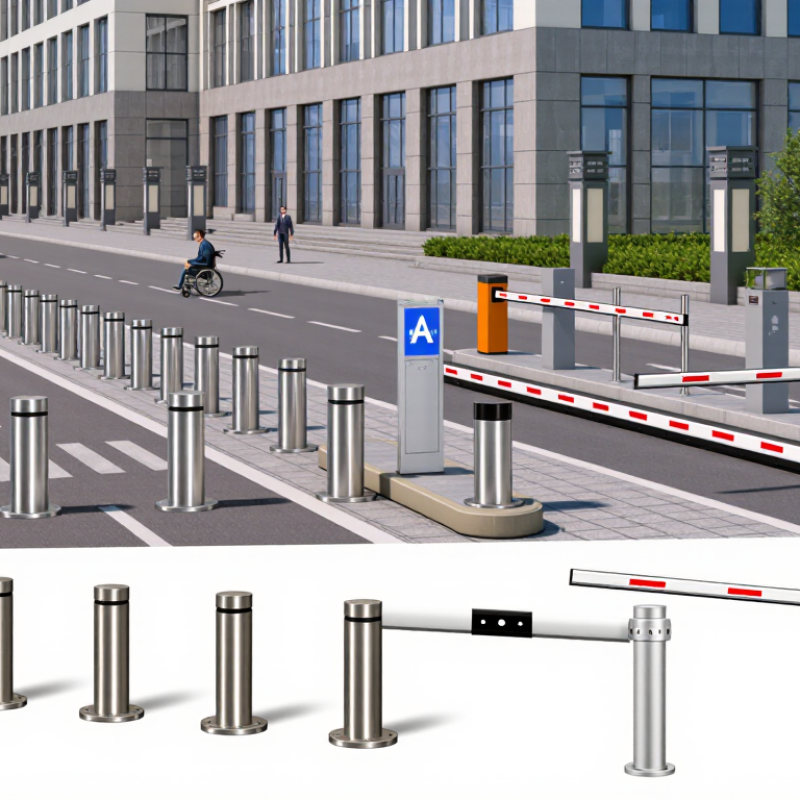
Fixed bollards stay in place and suit areas where access should remain restricted. Removable models can open a route when needed, but staff must store and reinstall them. Retractable bollards lower into the ground, allowing controlled vehicle access without leaving posts in the path. Flexible posts are useful for visual guidance, though they are not designed for the same level of impact resistance. Small differences matter.

Selection also depends on spacing, visibility, foundations, drainage, and nearby pedestrian routes. Review how people move through the site at different times of day. Check that emergency and service access remains practical. Product testing and installation details should match the site’s actual risk; appearance alone is not enough. In practice, teams can overlook daily maintenance. That deserves another look. Consider how often a bollard will be operated, who will operate it, and whether the ground can support its installation.
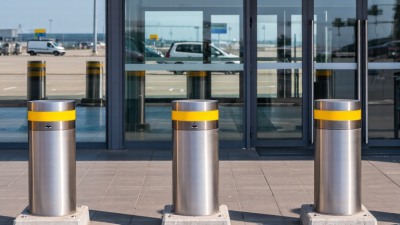

Assessing Site Risks, Traffic, and Access Requirements

Choosing security bollards in 2026 starts with the site, not the product catalog. Walk the perimeter at different times. Note delivery vans, visitor cars, bicycles, and pedestrian crossings. A quiet entrance at noon may become crowded during shift changes. Photograph blind corners, loading zones, and doors near vehicle routes. Small details matter. Measure clear widths and turning paths. Then identify the consequence of a vehicle entering each vulnerable area. Protecting a glass lobby differs from protecting a warehouse gate.

Traffic assessment should include vehicle mass, speed, frequency, and stopping distance. A lightweight post may guide traffic, but it may not resist a serious impact. Ask how often drivers reverse, queue, or mount the kerb. Look for tire marks and damaged curbs; they reveal real behavior better than drawings. Separate vehicle-impact protection from everyday access control. Rated fixed bollards may suit exposed edges, while removable or retractable units can support occasional service access. The choice must not obstruct emergency or maintenance routes. Confirm spacing against pedestrian movement and accessibility requirements.

Access needs often change by hour. Staff may need unrestricted entry, while deliveries require scheduled openings. Choose controls that remain visible, simple, and operable in poor weather. Include lighting, drainage, power failure behavior, and manual override planning. Test the layout with a delivery vehicle before installation. It is easy to overprotect a frontage and create congestion elsewhere. No risk model is perfect. I would review the design after several weeks of real use.

Comparing Materials, Impact Ratings, and Installation Methods

How to Choose Security Bollards in 2026?

Material selection should match the threat, environment, and maintenance plan. Steel cores provide strong energy absorption and resist repeated impacts. Stainless steel offers better corrosion resistance near coastlines, but costs more. Concrete-filled steel can improve rigidity, although damaged units may require heavier replacement work. Aluminum suits decorative areas, not high-impact protection. In practice, appearance often receives too much attention. The foundation matters more.

Impact ratings need careful reading. ASTM F2656/F2656M-23 rates barriers by vehicle type, mass, speed, and penetration. An M50/P1 rating represents a 15,000-pound vehicle traveling at 50 mph, with penetration limited to one foot during testing. PAS 68:2013 also records vehicle mass, speed, approach angle, and penetration distance. These figures are test conditions, not promises for every site. A rating without its full test code can mislead.

Installation changes performance dramatically. Deep-mounted bollards transfer impact forces into reinforced concrete and usually suit exposed perimeters. Shallow-mount systems reduce excavation, but require verified slab thickness, reinforcement, and edge distances. Surface-mounted units install quickly, yet depend heavily on anchor design and existing concrete quality. The U.S. Cybersecurity and Infrastructure Security Agency recommends combining vehicle barriers with stand-off distance and layered site controls. Drainage is easy to overlook. So is underground utility mapping. A certified engineer should review soil, foundation depth, vehicle approach paths, and maintenance access before approval. Even a high-rated bollard can fail when installed in weak concrete.

How to Choose Security Bollards in 2026? — Comparing Materials, Impact Ratings, and Installation Methods

Decision factor Option or measure Typical characteristics Best suited for Key considerations
Material Carbon steel High strength and toughness; widely used for impact-resistant fixed and retractable bollards. Exposed steel can corrode without suitable protection. Perimeters, vehicle approaches, loading areas, and other locations requiring structural resistance. Specify corrosion protection for the site environment, such as a suitable coating or galvanizing. Material alone does not establish crash performance.
Material Stainless steel Offers improved corrosion resistance compared with ordinary carbon steel; available in architectural finishes. Coastal or corrosive environments and sites where appearance and durability are priorities. Grade, finish, fabrication, and maintenance affect performance. A stainless-steel finish does not by itself indicate an impact rating.
Material Aluminum Lightweight and naturally corrosion resistant, but generally less suitable than structural steel for high-energy vehicle-impact protection. Decorative, access-control, and pedestrian-guidance applications where heavy vehicle impact resistance is not required. Confirm the intended function; do not treat a lightweight architectural bollard as a crash-rated barrier unless the complete system has been tested and rated.
Impact performance Non-rated or decorative May help guide pedestrians or discourage casual vehicle access, but has no verified vehicle-impact rating unless supported by test documentation. Visual delineation and low-risk areas without a defined hostile-vehicle threat. Do not assume that a large diameter, thick wall, or heavy appearance demonstrates crash performance.
Impact performance ASTM F2656/F2656M-rated system Uses standardized vehicle-impact testing and classifications. Ratings describe the tested barrier system and its penetration result under specified test conditions. Projects with a documented vehicle-threat assessment and a requirement for independently tested performance. Check the exact classification, test report, vehicle mass and speed, penetration result, and tested installation details. A rating applies to the tested configuration, not automatically to every similar bollard.
Impact performance Rating selection ASTM classifications include vehicle mass and impact-speed designations; the appropriate level depends on the project’s threat assessment and acceptable penetration distance. Sites where designers must match barrier performance to a defined vehicle threat. Do not select a rating by code alone. Consult the project security professional and applicable standards, and verify that the proposed foundation and spacing match the tested system.
Installation Embedded in concrete foundation The bollard is set into a designed below-grade foundation. This is a common arrangement for fixed security bollards. New construction or sites where excavation and permanent installation are feasible. Foundation depth, diameter, reinforcement, soil conditions, utilities, drainage, and bollard spacing are critical. Follow the tested design where an impact rating is required.
Installation Core-drilled or surface-mounted Can reduce excavation or simplify installation, but performance depends on the supporting slab, anchors, embedment, and tested assembly. Retrofits and locations with existing hard surfaces, subject to engineering review. Verify slab thickness and condition, reinforcement, edge distances, anchor design, and underground services. These methods are not interchangeable with a tested embedded system.
Installation Removable or retractable Allows authorized vehicle access; may be manually operated, mechanically assisted, or powered. Moving parts require inspection and maintenance. Entrances that need both access control and periodic vehicle passage. Confirm the required operating cycle, power and control requirements, drainage, emergency access, maintenance plan, and whether the exact model and installation have a relevant impact rating.
Site planning Spacing, pedestrian access, and utilities Layout must balance vehicle exclusion with accessible routes, emergency egress, and operational access. All sites, especially public spaces and building entrances. Have a qualified designer check local accessibility and building requirements, vehicle turning paths, underground utilities, sightlines, and clear widths before installation.

Selection reminder: Security performance depends on the complete assembly—including the bollard, foundation, soil or supporting structure, spacing, and installation—not on material or appearance alone. Confirm current test documentation and local requirements for the specific project.

Selecting Bollards for Visibility, Accessibility, and Maintenance

How to Choose Security Bollards in 2026?

Selecting Bollards for Visibility, Accessibility, and Maintenance

A bollard should be easy to notice before it becomes an obstacle. Contrast its finish with nearby paving, and consider reflective bands where vehicle headlights provide useful illumination. Check visibility from seated and standing eye levels; a planter or parked van can hide a well-designed post. The 2010 ADA Standards for Accessible Design specify a 36-inch minimum clear width for most accessible routes. Keep that space genuinely clear, not merely clear on a plan. Measure with doors open and people moving through.

Materials and surface treatments shape maintenance needs. A coated steel post may need prompt attention when chips expose metal, while concrete can crack or stain and resist quick repair. Ask who will inspect the installation, how damaged units are replaced, and whether cleaning equipment can reach around each base. FHWA’s 2013 Manual on Uniform Traffic Control Devices emphasizes maintaining traffic-control devices so they remain visible and legible; its guidance is a useful reference, though it does not replace a site-specific bollard inspection plan. Small details matter. Drainage, grit, and snowplow contact can shorten service life. I would not choose solely by purchase price; that comparison often misses routine labor.

Planning Installation, Compliance, and Long-Term Performance

Choosing security bollards in 2026 starts with the site, not the product. Map vehicle approaches, pedestrian routes, delivery access, underground utilities, and the distance available for foundations. A narrow pavement beside a glass entrance needs a different layout from a broad vehicle forecourt. Keep clear walking routes, and test turning paths with delivery vehicles. Small details matter. A bollard can stop a vehicle yet still create a trip hazard or block emergency access.

For impact protection, review independent crash-test documentation against ASTM F2656/F2656M. Its ratings identify test conditions, including vehicle speed and penetration, so compare the tested setup with the threat assessment rather than relying on a general “crash-rated” claim. For example, an M30 test involves a vehicle impact at 30 mph; the full rating and test report provide essential context. Match the foundation design to soil, pavement, drainage, and utility surveys. A strong post in weak ground is not a strong system. Check local accessibility and building requirements with the relevant authority before installation.

Plan for years of use. Specify corrosion-resistant finishes appropriate to coastal salt, road de-icers, or frequent wash-downs, and confirm how damaged units can be inspected or replaced. Removable or retractable models need practical access for maintenance, not just an attractive specification. Record installation depth, concrete details, and inspection dates. The uncomfortable question is whether the site team will actually maintain them. If the answer is uncertain, simplify the system. A maintenance plan that looks perfect on paper may still fail in a busy loading area.

Choosing an impact rating: ASTM F2656 M30, M40, and M50 identify vehicle impact test speed classes of 30, 40, and 50 mph, respectively. Select a rating based on the site’s vehicle-threat assessment, and verify the tested penetration rating, foundation design, and installation requirements for the specific bollard system. A speed class alone does not describe the full test result.