Why Are Security Bollards Essential for Global Buyers?
Security Bollards have become essential for global buyers protecting people, buildings, and public spaces from accidental or deliberate vehicle impact. Their value extends beyond appearance. A well-designed bollard can protect a glass entrance, guide traffic, and preserve pedestrian movement without creating an unfriendly environment.
Security expert Bruce Schneier once said, “Security is a process, not a product.” This principle applies directly to bollard selection. Buyers must consider vehicle weight, approach speed, impact direction, foundation depth, operating frequency, and maintenance access. A shallow installation may look strong but perform poorly during a real collision. That detail is easy to overlook.
Experienced suppliers usually begin with a site assessment. They examine delivery routes, emergency access, drainage, lighting, and pedestrian behaviour. Automatic, fixed, removable, and retractable models serve different needs. Impact-tested products can offer stronger evidence, but test results still require careful interpretation. Standards, certification, and installation records should be reviewed with qualified local professionals.
Global purchasing also introduces practical challenges. Climate, soil conditions, power supply, replacement parts, and technical support can vary sharply between regions. Stainless steel may suit a coastal entrance, while a different finish may perform better in a dry industrial setting. No solution is perfect.
That limitation matters. Security Bollards should not be selected from photographs alone. A polished product can still fail when its foundation, controls, or maintenance plan is unsuitable. Reliable buyers compare documented performance with real site conditions. They also leave room for human behaviour, because people do not always follow the design.
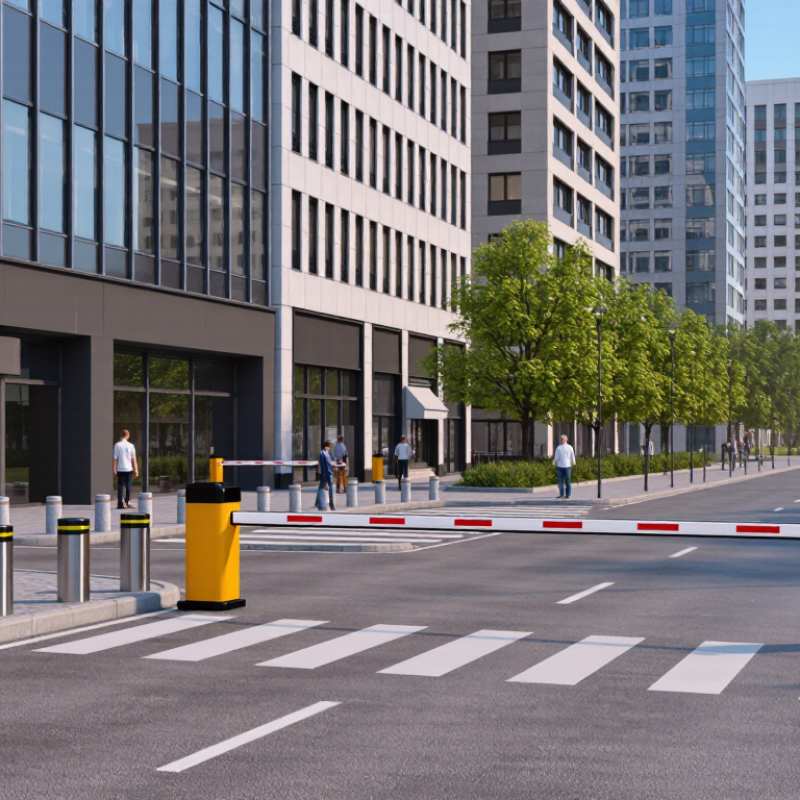
Security bollards are short, strong posts designed to control vehicle movement and protect people, buildings, and entrances. They may be fixed, removable, or retractable. Some automatic models rise from the ground within seconds. Their real function is simple: stop or redirect a vehicle before it reaches a protected zone.
A bollard absorbs impact through its steel body, internal reinforcement, and concrete foundation. Spacing matters too. Narrow gaps can block vehicles while preserving pedestrian access. Professional buyers should review ASTM F2656 or IWA 14-1 test ratings. These standards assess vehicle mass, speed, penetration, and impact performance.
The 2024 Global Terrorism Index reported 8,352 terrorism deaths in 2023.
The WHO’s Global Status Report on Road Safety 2023 estimates 1.19 million annual road deaths worldwide.
That figure does not make bollards a complete solution. It shows why physical protection needs careful planning. Everyday traffic risks therefore deserve attention alongside deliberate vehicle threats. A properly selected bollard can separate moving vehicles from crowded entrances, outdoor seating, and delivery areas.
Yet certification alone is not enough. Soil strength, foundation depth, drainage, maintenance, and approach speed can change performance. A tested product may still fail when installation is rushed. That is an uncomfortable detail, but buyers should examine it carefully. Good protection is rarely just a post in the ground.
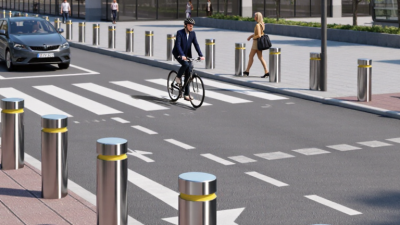
For global buyers, security bollards are more than metal posts around a building. Their main role is to stop or slow vehicles entering protected spaces. A distracted driver may jump a curb outside a shop, office, or school. More serious threats include deliberate vehicle impact, unauthorized access to loading zones, and vehicle movement near crowded entrances. Strong physical separation creates valuable distance between vehicles and people. That distance can reduce injury risks and protect doors, glass, equipment, and stock. It cannot remove every risk.
Good selection starts with the threat, not the product photograph. Buyers should review vehicle size, likely speed, approach angles, stopping distance, and pavement strength. Fixed bollards suit permanent protection. Removable or retractable models may support controlled access, but they require disciplined operation. Tested impact performance matters, yet the rating alone is not enough. Foundation depth, spacing, drainage, visibility, and maintenance can decide whether a system performs properly. A weak base can defeat a strong post.
Site assessments from experienced security and civil engineering teams often identify overlooked hazards. Emergency routes, delivery schedules, wheelchair access, and winter damage deserve attention. In coastal or high-heat areas, corrosion and material movement need regular inspection. Buyers should request installation drawings, test evidence, maintenance guidance, and clear warranty terms. A bollard is not a magic shield. It may also create a trip or access problem when poorly placed. That uncomfortable detail deserves honest review before purchase.
Security bollards are not one-size-fits-all products. Fixed bollards suit building entrances, loading zones, and roadside perimeters requiring constant protection. They are usually anchored into concrete and offer strong resistance against accidental vehicle contact. Removable bollards work better where occasional vehicle access is necessary, such as service lanes or emergency routes. Operators can unlock and lift them when needed.
Automatic rising bollards support controlled access at offices, campuses, hotels, and pedestrian streets. They can connect with access readers, cameras, or ticket systems. Their performance depends on foundation depth, drainage, power supply, and maintenance. Manual fold-down bollards provide a simpler option for private parking areas. They need less equipment, but users must lower and secure them correctly. That small action is often overlooked.
Surface-mounted bollards fit sites where deep excavation is impractical. They install faster, yet their strength depends heavily on the slab and anchor design. Materials also matter. Galvanized steel suits exposed outdoor areas, while stainless steel may better match public-facing architecture. Flexible polymer bollards can guide traffic, but they are not a substitute for impact-rated protection. Buyers should compare vehicle mass, approach speed, soil conditions, visibility, and pedestrian clearance. Independent test documents are valuable evidence. Product appearance alone proves very little. Power failure planning also deserves attention, because an automatic unit may not behave as expected without a clear manual override.
| Bollard Type | Typical Applications | Common Material / Finish | Typical Dimensions | Access Function | Primary Security Benefit | Key Buying Considerations |
|---|---|---|---|---|---|---|
| Fixed Security Bollard | Building entrances, pedestrian zones, storefronts, loading areas, and perimeter protection | Structural steel or stainless steel; galvanized, powder-coated, or brushed finish | Usually 700–1,200 mm above ground; approximately 100–220 mm diameter | Permanent restriction; no routine vehicle access | Provides continuous physical separation between vehicles and protected areas | Foundation depth, impact rating, spacing, drainage, corrosion protection, and visibility |
| Removable Security Bollard | Temporary road closures, event venues, service lanes, shared streets, and emergency routes | Steel or stainless steel sleeve with a removable post and locking mechanism | Commonly 700–1,000 mm above ground; approximately 100–200 mm diameter | Manual removal when authorized vehicle access is required | Combines vehicle deterrence with flexible access control | Post weight, lock security, storage requirements, sleeve drainage, and frequency of removal |
| Retractable / Automatic Bollard | Controlled entrances, corporate sites, government facilities, hotels, logistics yards, and parking access points | Steel or stainless steel body; hydraulic, pneumatic, or electromechanical drive | Usually 500–900 mm above ground; approximately 150–275 mm diameter | Powered raising and lowering through access-control systems | Restricts vehicles while allowing scheduled, credentialed, or emergency access | Cycle frequency, power supply, manual override, drainage, safety sensors, and maintenance access |
| Crash-Rated Fixed Bollard | Critical infrastructure, transport hubs, embassies, public buildings, data centers, and high-risk perimeters | Engineered steel with reinforced foundations and tested protective finishes | Often 750–1,200 mm above ground; size depends on the tested system | Permanent protection, or paired with a tested active access system | Designed to resist defined vehicle impact conditions when installed as tested | Verify test vehicle, impact speed, penetration distance, foundation design, installation conditions, and certification |
| Crash-Rated Retractable Bollard | High-security entrances requiring both hostile-vehicle mitigation and controlled vehicle movement | Reinforced steel or stainless steel with a heavy-duty hydraulic or electromechanical system | Commonly 600–900 mm above ground; dimensions are system-specific | Automated operation with authorized access and emergency release functions | Supports controlled access while maintaining a tested vehicle-impact barrier | Certified configuration, fail-safe behavior, power backup, warning signals, cycle life, and drainage |
| Flexible Polymer Bollard | Parking lanes, cycle paths, traffic islands, temporary channelization, and low-speed areas | Polyurethane, rubber, or flexible polymer with reflective bands | Typically 450–1,000 mm high; approximately 80–200 mm diameter | Visual guidance and light-duty separation | Improves visibility and reduces damage from minor vehicle contact | Not a substitute for anti-ram protection; check UV resistance, rebound performance, anchoring, and visibility |
| Decorative Security Bollard | Retail districts, hotels, museums, parks, historic areas, and landscaped public spaces | Cast iron, steel, stainless steel, or aluminum outer finish; protective coating varies | Often 600–1,100 mm high; approximately 100–250 mm diameter | Usually fixed; removable versions may be available | Creates a visually integrated boundary while supporting pedestrian safety | Confirm whether the design is decorative or impact-tested; assess finish durability and replacement availability |
| Lighted / Reflective Bollard | Pedestrian routes, parking areas, airports, campuses, roadsides, and low-light access points | Steel, aluminum, polymer, or stainless steel with reflective tape or LED lighting | Usually 450–1,200 mm high; diameter varies by protective function | Fixed or removable; lighting improves visual guidance | Enhances nighttime detection and helps define vehicle-free boundaries | Electrical protection, brightness, visibility angle, battery or mains power, weather rating, and impact requirements |
Security bollards support global safety by separating vehicles from people, entrances, and sensitive equipment. The World Health Organization’s Global Status Report on Road Safety 2023 records about 1.19 million road deaths worldwide each year. It also estimates 20–50 million nonfatal injuries. These figures show why vehicle control belongs in everyday site planning, not only emergency response.
A well-designed bollard system can guide delivery vehicles, restrict unauthorized entry, and preserve emergency routes. The U.S. National Highway Traffic Safety Administration reported 7,314 pedestrian deaths in its 2023 Traffic Safety Facts.
For global buyers, selection should consider impact performance, spacing, foundation depth, visibility, and local access needs. ASTM F2656 and PAS 68 testing can provide useful evidence, but certification alone does not guarantee site protection. Installation quality matters.
Still, a bollard is not a magic wall. Poor placement can block evacuation paths or create trip hazards. That assumption deserves reconsideration. Buyers should combine physical barriers with gates, lighting, cameras, and clear operating procedures.
Security teams should also review seasonal changes, delivery hours, and maintenance records. A damaged post may look minor while reducing the whole system’s reliability. Practical experience shows that the strongest design is often simple, visible, and easy for staff to understand.
Global buyers should evaluate bollards as engineered safety systems, not simple steel posts. The World Health Organization’s Global Status Report on Road Safety 2023 records approximately 1.19 million road deaths annually. This figure highlights the need to separate vehicle protection from ordinary traffic control.
Start with the tested threat level. ASTM F2656-23 and IWA 14-1:2013 assess vehicle impact performance using vehicle mass, speed, and penetration distance. A bollard rated for a light vehicle may fail against a heavier truck. Check the exact test configuration. Do not rely on a rating alone. A stronger bollard is not automatically better. That assumption can be costly.
Review the foundation design, soil conditions, drainage, and installation depth. A certified product can underperform when its concrete base is poorly designed. CPNI guidance on vehicle security barriers also emphasizes site layout, approach paths, and hostile vehicle mitigation planning. Measure the available setback distance before purchasing. Confirm visibility, pedestrian flow, emergency access, and accessibility requirements. In cold or coastal locations, inspect corrosion protection and operating temperatures. Maintenance access matters too. Ask for inspection intervals, replacement procedures, test certificates, and documented impact data. From practical site assessments, the cheapest quote often excludes excavation, traffic management, wiring, or future repairs. That makes price comparisons misleading. Procurement teams should compare total lifecycle cost, local technical support, and spare-part availability across the intended service period.
Impact-rated bollards help control vehicle access and reduce the consequences of hostile or accidental vehicle incursions. Before purchasing, global buyers should compare the tested impact speed, vehicle mass, penetration rating, installation conditions, and local compliance requirements.
The chart shows the approximate kinetic energy generated by a 15,000-pound test vehicle at ASTM F2656 impact speeds of 30, 40, and 50 mph. Higher impact energy generally requires stronger bollard construction, foundations, and certified installation. Energy values are calculated using E = ½mv² and rounded to the nearest 1,000 kJ. Buyers should verify the exact test certificate and penetration rating for each product.
Reference framework: ASTM F2656/F2656M vehicle impact testing; test conditions and product ratings must be confirmed with the applicable standard and certification documentation.