Choosing the right Security Bollards manufacturer requires more than comparing prices or browsing attractive product photographs. Global buyers need tested performance, clear documentation, dependable production, and practical installation support. A bollard protecting a hotel entrance, airport lane, or warehouse gate must resist realistic impact forces while fitting the site’s traffic flow and appearance.
Dr. Mary Lynn Garcia, a respected physical protection systems specialist, states, “Physical protection is a system, not a single product.” That principle matters when evaluating China’s leading Security Bollards manufacturers. Strong suppliers should explain crash-test ratings, materials, foundation requirements, hydraulic or fixed mechanisms, drainage details, and maintenance intervals. Buyers should also check standards such as ASTM F2656, PAS 68, or IWA 14-1, where applicable. Certification alone is not enough.
Look closely at the details. Ask for factory inspection records, test reports, coating specifications, wiring diagrams, and reference projects in similar climates. Stainless steel may suit coastal locations, while galvanized steel can offer practical durability in demanding industrial areas. Installation quality remains critical. Even a well-engineered bollard can underperform if its foundation is shallow or poorly reinforced.
The market is not perfect.
Some product descriptions sound stronger than the evidence. This deserves careful reflection. Manufacturers may also present different testing methods as direct comparisons, although they are not always equivalent. This guide examines reliable Chinese suppliers, their technical capabilities, customization options, quality controls, export experience, and after-sales service. Its purpose is simple: help global buyers choose security equipment with fewer assumptions and more confidence.
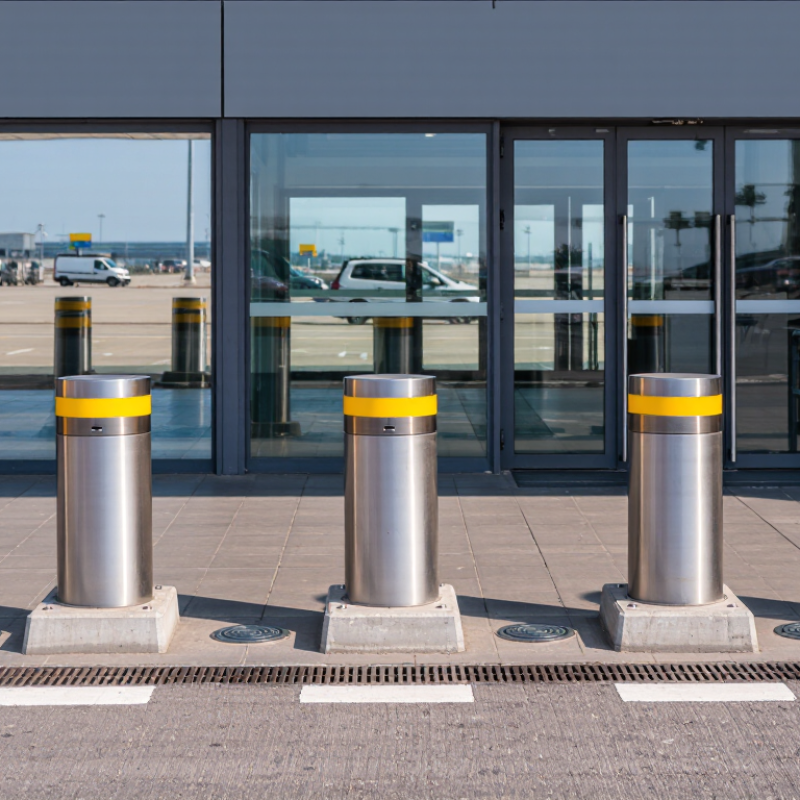
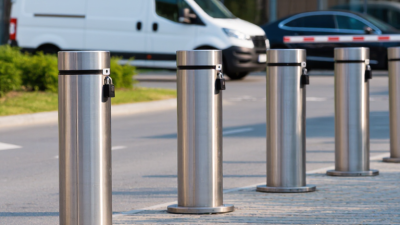
Security bollards are short, strong posts designed to control vehicle access and protect people, buildings, and equipment. They can be fixed, removable, automatic, or manually retractable. Their performance depends on steel grade, wall thickness, foundation depth, spacing, and tested impact resistance. A polished finish looks useful, but structural design matters more.
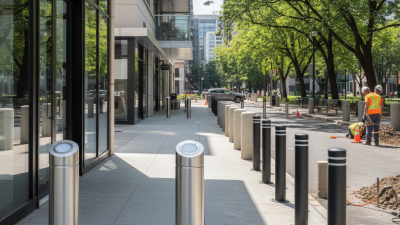
Global buyers need bollards because vehicle threats and access problems appear in many environments. Shopping streets, warehouses, airports, schools, and public entrances often require different protection levels. A busy loading area may need fixed bollards, while an emergency route may require removable units. Poor spacing can leave a vehicle-sized gap. Weak foundations can make strong posts ineffective.
Practical selection starts with a site survey. Measure traffic flow, pavement depth, drainage, turning angles, and maintenance access. Coastal projects need corrosion-resistant materials and suitable coatings. Cold regions may require frost-aware foundations and protected moving parts. Buyers should request material records, installation drawings, test evidence, and clear maintenance instructions. Local engineering requirements still need review.
One detail is easy to miss. Bollards can protect a doorway yet block accessible movement. I have seen layouts that looked secure on paper but created unsafe pedestrian bottlenecks. That design deserved another review. Chinese manufacturers serving global buyers should communicate openly about testing limits, lead times, replacement parts, and installation conditions. Clear documentation builds more trust than impressive photographs.

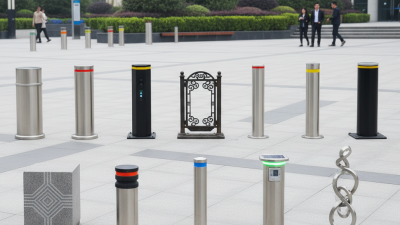
China’s security bollard manufacturers produce several types for different access-control needs. Fixed bollards suit storefronts, loading areas, and pedestrian plazas. Removable models use ground sleeves, allowing occasional vehicle access. Automatic retractable bollards combine electric or hydraulic drives with controlled entry systems. Telescopic designs can reduce visual obstruction when lowered. Stainless steel covers resist corrosion, while galvanized steel often offers a lower-cost structure.
Demand is linked to urban growth. The United Nations’ World Urbanization Prospects projects that 68% of the global population will live in cities by 2050. A 2024 perimeter security market report by MarketsandMarkets also identifies vehicle barriers as a continuing physical-security segment. However, buyers should not rely on appearance alone. ASTM F2656/F2656M and IWA 14-1 evaluate impact performance through vehicle mass, speed, and penetration distance. A “crash-rated” label without test details is weak evidence.
In factory inspections, check wall thickness, weld consistency, drainage holes, foundation drawings, and repeated-cycle results. A hydraulic bollard may look powerful, yet poor drainage can damage its cylinder after heavy rain. Electric units are quieter, but cold weather may reduce response consistency. This is where specifications can be imperfect. Suppliers sometimes publish peak force instead of complete operating data. Ask for test reports, maintenance intervals, spare-part lists, and installation tolerances. A practical trial should include several thousand raising and lowering cycles, not only a showroom demonstration.
China’s leading security bollard manufacturers increasingly design from site risk, not appearance. Field inspections show that spacing, foundation depth, and drainage often determine real performance. A strong steel post can still fail in weak concrete.
The World Health Organization reported about 1.19 million annual road deaths in its Global Status Report on Road Safety 2023. This reinforces the need to separate vehicles from pedestrians with carefully tested systems. Chinese factories commonly use impact testing aligned with ASTM F2656 or IWA 14-1. These methods evaluate vehicle mass, impact speed, penetration, and barrier performance. Certification alone is not enough. Engineers must match the tested configuration to the actual site.
Durability receives equal attention. The NACE IMPACT study estimated global corrosion costs at approximately US$2.5 trillion annually, or 3.4% of global GDP. Manufacturers therefore combine galvanized steel, protective coatings, sealed welds, and internal drainage. Stainless steel may suit coastal entrances, while coated carbon steel can reduce cost inland. Some designs still overlook concealed moisture. That weakness deserves more honest testing. Factory quality teams should record coating thickness, weld inspection, concrete strength, and cycle testing before shipment. Clear installation drawings also matter, because a few centimeters of misalignment can reduce protection and create trip hazards.
| Design and Safety Dimension | Common Engineering Specification | Why It Matters for Global Buyers | Recommended Verification Evidence |
|---|---|---|---|
| Bollard Material | Structural carbon steel for impact resistance; 304 or 316 stainless steel for exposed architectural surfaces and corrosion-sensitive locations. | Material selection affects impact performance, appearance, corrosion resistance, welding requirements, and service life. | Material certificates, grade identification, welding procedure records, and independent chemical or mechanical test reports. |
| Corrosion Protection | Hot-dip galvanizing is commonly specified for carbon-steel components; powder coating or wet coating may be added for color and environmental protection. Galvanizing should be specified in accordance with ISO 1461 where applicable. | Protection against moisture, road salt, and industrial contaminants helps reduce maintenance and premature structural loss. | Coating system description, coating-thickness measurements, surface-preparation records, and salt-spray results when required by the project. |
| Impact-Test Classification | High-security products may be tested under standards such as ASTM F2656/F2656M, IWA 14-1, or ISO 22343-1. Low-speed vehicle-impact products may use ASTM F3016 where appropriate. | A tested rating provides more reliable evidence than a general claim such as “crash resistant.” Test standards are not automatically interchangeable. | Full test report identifying vehicle mass, impact speed, penetration distance, bollard spacing, foundation design, and the exact tested configuration. |
| Foundation and Anchor Design | Reinforced-concrete foundations, embedded sleeves, base plates, and anchor systems are selected according to soil conditions, vehicle threat, spacing, and structural calculations. | A tested bollard can underperform if the installed foundation, reinforcement, or anchorage differs from the tested arrangement. | Foundation drawings, reinforcement details, anchor calculations, geotechnical assumptions, and installation tolerances. |
| Fixed, Removable, or Retractable Type | Fixed bollards provide continuous protection; removable models use locking sockets; automatic retractable models use hydraulic, pneumatic, or electromechanical actuation. | The operating type determines access control, maintenance needs, emergency procedures, installation complexity, and lifecycle cost. | Operating-cycle data, manual override instructions, replacement-part list, maintenance schedule, and emergency-release procedure. |
| Safety Controls for Automatic Systems | Safety designs may include vehicle-loop detection, photoelectric sensors, warning lights, audible alarms, obstruction detection, emergency stop controls, and manual lowering facilities. | These features help reduce the risk of vehicle, pedestrian, and maintenance accidents during movement. | Control-system schematic, safety-function description, electrical test records, fault-response logic, and applicable local compliance documentation. |
| Drainage and Water Management | Retractable bollard pits generally require drainage, sump arrangements, corrosion-resistant internal components, and protection against groundwater or surface runoff. | Poor drainage can cause corrosion, freezing damage, electrical faults, and unreliable operation. | Drainage layout, ingress-protection information, environmental operating limits, and cold-weather operating procedure. |
| Dimensions and Visibility | Common project variables include exposed height, outside diameter or width, spacing, reflective bands, LED indicators, and contrasting finishes. Final dimensions must follow the site risk assessment and access requirements. | Correct geometry must balance vehicle denial, pedestrian circulation, accessibility, emergency access, and visibility in poor weather or low light. | Dimensioned drawings, visibility assessment, pedestrian-clearance review, and site-specific traffic-management plan. |
| Manufacturing Quality Control | Typical controls include incoming-material inspection, dimensional checks, weld inspection, coating inspection, electrical testing, functional testing, and final assembly checks. | Documented quality control improves consistency across production batches and reduces installation or commissioning problems. | Inspection and test plan, batch traceability, nonconformance records, calibration certificates, and factory-acceptance-test results. |
| Installation and Lifecycle Support | A complete supply package should include installation drawings, commissioning instructions, spare-parts information, preventive-maintenance intervals, and technical support arrangements. | Clear documentation lowers total ownership cost and supports reliable operation after handover. | Installation manual, maintenance checklist, warranty terms, spare-parts availability statement, and response-time agreement. |
Note: Performance ratings, dimensions, foundation details, environmental limits, and compliance requirements must be confirmed for the exact bollard model and project installation. A certification or test result applies only to the configuration evaluated in the relevant report.
China Top Security Bollards Manufacturers for Global Buyers
Reliable bollard manufacturers should prove quality through testing, traceable materials, and consistent production records. Buyers should review steel grades, weld inspection reports, coating thickness, and factory acceptance procedures. For hostile vehicle mitigation projects, standards such as ASTM F2656, IWA 14-1, and PAS 68 may apply. However, each standard measures different impact conditions. A certificate alone does not guarantee site performance.
Export-ready manufacturers usually provide test reports, installation drawings, maintenance manuals, packing lists, and certificates of origin. CE or UKCA marking may support certain market requirements, but applicability depends on the product and destination. Check electrical safety, hydraulic components, emergency lowering systems, and local approval rules before ordering. Experienced exporters also protect parts with moisture barriers and reinforced crates. Small packaging failures can create expensive delays.
Tips: Ask for a recent test report matching the exact bollard model. Confirm impact speed, vehicle weight, foundation design, and crash direction. Request production photos or a live factory inspection when possible. Do not rely only on polished brochures. Some suppliers may present outdated certificates or incomplete testing details. That risk deserves careful questioning. A practical supplier should answer clearly, admit limitations, and provide measurable evidence before shipment.
Choosing among China’s top security bollard manufacturers requires more than comparing prices. Global buyers should inspect production capability, material quality, and documented testing. Ask for steel grades, wall thickness, corrosion protection, impact resistance, and hydraulic component details. Request recent test reports, factory photographs, and traceable batch records.
A reliable supplier should explain how bollards perform in real settings. Look for loading areas, parking entrances, government facilities, and pedestrian zones. Request a physical sample when possible. Check weld consistency, surface finish, lifting points, drainage, and emergency operation. A polished website proves little. Factory audits, video inspections, and clear quality procedures provide stronger evidence. Lead times also need written confirmation. Delays can disrupt construction schedules.
Tips: Compare at least three suppliers using the same specification sheet. Confirm installation drawings, spare parts, warranty terms, and response times. Ask whether the supplier has handled your climate and soil conditions. Salt air, freezing temperatures, and poor drainage can shorten service life. Do not accept vague claims about compliance; request applicable certificates and test methods. A sample may look excellent, yet installation can fail without proper foundations. That detail is often overlooked. No supplier gets every detail right, so record open questions and require written answers before payment. Reliable communication matters as much as factory equipment.
This 100-point evaluation framework prioritizes measurable procurement factors for security bollards, including compliance documentation, impact performance, corrosion resistance, customization capability, delivery reliability, after-sales support, and export documentation. Buyers should verify each criterion through test reports, technical drawings, production samples, references, and contractual commitments.