How to Choose Warehouse Bollards in 2026?
Choosing Warehouse Bollards in 2026 starts with the hazards they must control, not their color or price. In a busy facility, forklifts turn tight corners, pallet loads block sightlines, and pedestrian routes cross vehicle lanes. Small details matter. A practical selection process matches bollard strength, placement, and fixing method to the vehicles, likely impact risks, and floor construction. Start by reviewing dock doors, rack ends, columns, machinery, charging areas, and walkways. Measure turning clearance, too. A barrier that protects a column but narrows a forklift route may create a different problem.
Compare products using documented impact ratings and test conditions, rather than relying on broad claims such as “heavy duty.” Check the material, diameter, height, base plate or embedment, finish, and maintenance needs. Confirm that the proposed fixing method suits the site’s concrete and expected loads; ask a qualified installer or manufacturer when specifications are unclear. No single model fits every site. Even a well-rated bollard can be ineffective if its position leaves an approach exposed. Visibility also counts: contrasting finishes and consistent placement help operators recognize protected zones. A neat-looking layout can still fail operationally. Review the plan with warehouse staff, then check whether protection interferes with cleaning, pallet movement, emergency access, or routine repairs. This guide will outline how to assess those trade-offs, compare common bollard types, and choose a system that fits real operating conditions. Verify current product documentation before specifying or installing.
Assess Warehouse Traffic Patterns and Impact Risks
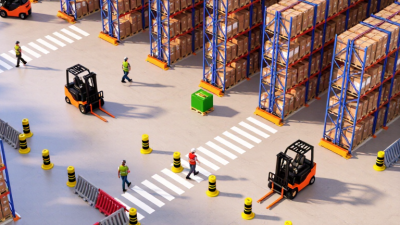
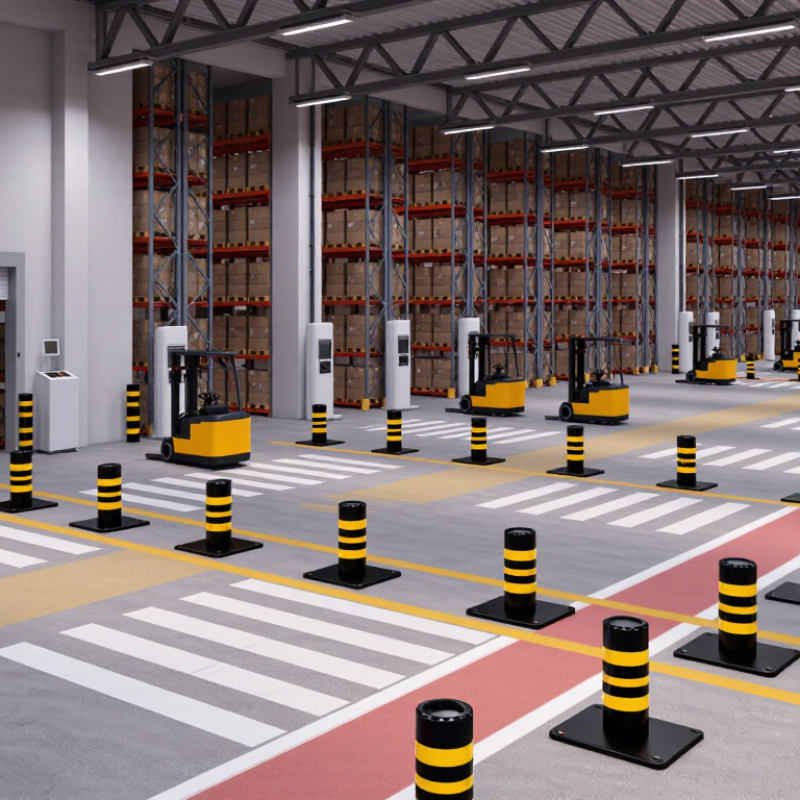
Before specifying warehouse bollards, map vehicle movement across a full operating week. Record forklift and pallet-truck routes, peak-hour crossings, reversing zones, and near misses. Mark blind corners where tall loads block operators’ sightlines. Measure turning clearance using the largest routine load, not an empty truck.
Small detail. Big consequence.
OSHA estimates powered industrial trucks cause about 85 work-related deaths and 34,900 serious injuries annually in the United States (OSHA, “Powered Industrial Trucks”).
These figures cover workplaces broadly, not warehouses alone, but they underline the value of assessing exposure before choosing protection.
Match bollard locations and impact ratings to the vehicles and risks observed. Prioritize dock edges, rack ends, columns, and pedestrian crossings near busy routes. Note vehicle type, loaded weight, and typical speed; impact energy rises sharply as speed increases.
Speed changes everything.
Avoid relying on a single standard spacing across the building.
One limitation: near-miss records often miss close calls that workers do not report.
Walk the floor with operators, compare observations with incident logs, and reassess after layout or shift changes. Have a qualified safety or structural professional verify that the proposed protection suits the expected impact and the surface where it will be installed.
Set Protection Goals for People, Structures, and Equipment
Set protection goals before choosing warehouse bollards. People come first. Walk the floor during a busy shift and watch where forklifts cross pedestrian routes, reverse near doors, or queue beside packing areas. A marked walkway may look safe on a plan, yet pallets can block sightlines in real use. That gap matters. Note near misses, blind corners, and places where workers step aside to let vehicles pass.
Structures need a different assessment. Identify exposed columns, dock edges, wall corners, and door frames, then consider the likely vehicle approach and impact direction. Bollard spacing should discourage contact without obstructing carts, emergency access, or routine loading. Check the floor construction and anchoring requirements, too; a strong post cannot compensate for a weak slab. Site conditions vary, so confirm installation details with a qualified professional.
Protect equipment according to its role and replacement cost. Charging stations, control panels, conveyor supports, and stored materials may need different levels of separation. Measure turning paths with the largest vehicle that regularly uses each aisle. Keep guards visible, and inspect them for loosened anchors, dents, or damaged coatings. A tidy layout can still fail during a rushed shift, so review the plan with operators and adjust it after actual use.
Choose Bollard Materials, Sizes, and Mounting Methods
Warehouse bollards should match the impact risk, not just the aisle drawing. The Bureau of Labor Statistics’ 2023 Survey of Occupational Injuries and Illnesses reported 4.5 total recordable cases per 100 full-time workers in transportation and warehousing. That broad sector rate does not measure bollard performance. It does underline why vehicle routes and pedestrian edges deserve attention. Small details matter.
Choose steel for robust impact protection, then specify a corrosion-resistant finish for damp or washdown areas. Stainless steel may suit harsh environments, but its higher cost is not always justified. Plastic sleeves improve visibility; they should not be mistaken for structural protection. Set bollard height and spacing around the actual forklift, pallet, and rack geometry, leaving turning clearance without exposing rack legs. There is no universal diameter: impact resistance depends on vehicle mass, speed, bollard design, and installation. Cast-in mounting can provide strong resistance when designed for the slab; surface-mounted posts are easier to retrofit, but anchors and concrete condition limit performance. No choice is perfect. A common oversight is approving the layout before checking slab thickness and anchor edge distances. Tie the specification to a site risk assessment, and confirm the manufacturer’s tested performance and installation requirements before ordering.
How to Choose Warehouse Bollards in 2026? — Materials, Sizes, and Mounting Methods
Material density is one useful point of comparison when evaluating bollards. It does not indicate impact resistance: performance also depends on bollard design, wall thickness, foundation, and installation.
Selection tip: Choose diameter and wall thickness for the vehicle and hazard, then select a mounting method suited to the floor and required impact protection. Embedded bollards generally need suitable foundations; surface-mounted bollards depend on slab capacity and anchors; removable designs can preserve access. Confirm specifications with a qualified supplier or engineer.
Verify Safety Standards, Visibility, and Site Compatibility
Choosing warehouse bollards in 2026 starts with checking what each unit is designed to withstand. Confirm its tested impact rating, installation method, and supporting documentation. Then compare these details with the vehicles, travel speeds, and exposure risks at your site. Applicable safety requirements can vary by location and facility type, so verify them with a qualified safety professional or local authority. A heavy-looking post is not proof of tested performance. Small details matter. Anchor depth and concrete condition can affect how well a bollard performs during impact.
Visibility matters just as much. Look for clear contrast against floors, walls, and equipment, with reflective bands where lighting is poor. Check sightlines from forklift seats and pedestrian routes; a bollard hidden behind stacked pallets may not help much. Walk the area during a busy shift. Measure twice. Finally, confirm site compatibility before choosing a layout. Bollards should protect doors, rack ends, and utilities without narrowing turning paths or blocking emergency access. Check slab thickness, underground services, door movement, and cleaning needs. A tidy plan can still overlook a drain or a tight corner. Revisit the layout with operators, because their daily routes may reveal problems the drawing misses.
Compare Installation Needs, Maintenance, and Lifecycle Costs
Choosing warehouse bollards in 2026 starts with the floor, not the catalog. Slab thickness, reinforcement, and nearby utilities affect drilling and anchoring. Mark forklift turning paths and pedestrian crossings before selecting fixed, removable, or flexible posts. A tidy layout can still miss a pallet’s real swing. Check it during busy shifts.
Installation costs include more than the bollard itself. Allow for utility checks, drilling, concrete work, curing time, and temporary changes to traffic flow. Downtime costs money. Removable posts can help where access changes, but their sockets need regular cleaning and inspection. Fixed posts may need less routine attention, though a damaged anchor can make repairs disruptive. Details matter.
Compare lifecycle costs over several years, not just purchase prices. Include inspections, coating touch-ups, replacement parts, and the cost of blocked aisles during repairs. Keep a simple log of impacts and loose anchors; patterns may reveal a poorly placed post. I would revisit the layout after seasonal workflow changes, since yesterday’s safest position may not fit today’s traffic. Estimates can still miss small site-specific costs, so confirm installation conditions before committing.