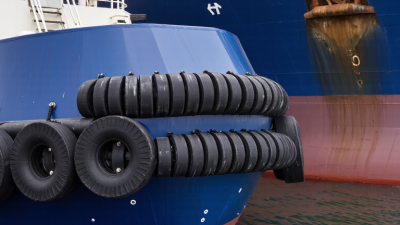
Cell Rubber Fender systems help protect ships, quay walls, and loading structures during berthing. Their broad contact surface absorbs impact, while the central cell compresses under load. The result is a compact fender suited to many ports and vessel types. But product names alone do not prove performance.
For this guide to China’s leading manufacturers and suppliers, buyers should examine more than catalog dimensions. Check rated energy absorption, reaction force, rubber compound, steel flange details, and test documentation. Ask how each supplier controls curing and inspects finished units. A fender may look sound on a warehouse floor. Its performance depends on its design and production quality.
A reliable expert quotation requires a verifiable source. No article or quotation was supplied for this request, so naming an expert and attributing a statement would risk inventing evidence. Before publication, add a checked quotation from a named marine or fender-design specialist. That small omission matters. This overview can still help readers compare China-based suppliers, identify useful technical questions, and understand where project-specific engineering review is essential. Cell Rubber Fender selection should match the berth, vessel approach conditions, and operating requirements—not simply the lowest quoted price.
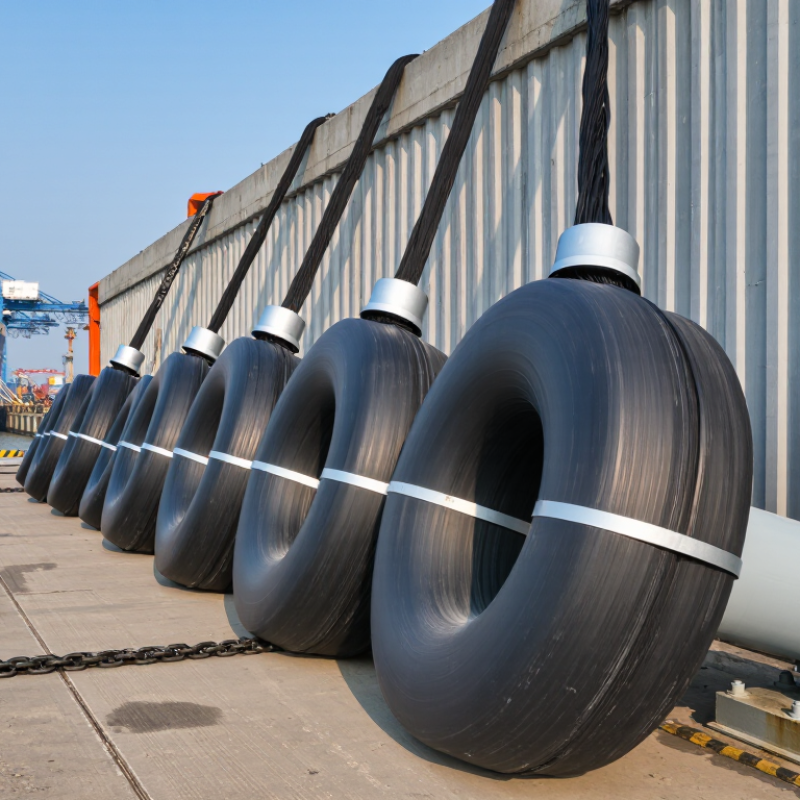
A cell rubber fender uses a thick, hollow rubber body, usually fixed between a quay wall and a steel frontal panel. Its cellular profile compresses under vessel impact. A flared base transfers force into anchor bolts, while the panel spreads contact across the hull. This geometry matters. It turns berthing energy into controlled deflection and reaction force, reducing concentrated contact loads. The rubber rebounds after unloading, but repeated compression and heat can gradually change its response. Fender selection depends on berthing energy, not appearance.
PIANC’s 2002 Report of Working Group 33, Guidelines for the Design of Fender Systems, treats energy absorption, reaction force, and hull pressure as linked design checks. Engineers should account for vessel displacement, approach speed, angle, tide range, and available berth clearance.
UNCTAD’s Review of Maritime Transport 2024 reports that seaborne trade grew 2.4% in 2023. That growth puts steady pressure on ports to protect quay structures and vessel hulls. Cell fenders offer compact installation, yet performance varies with rubber compound, temperature, aging, and manufacturing tolerances.
Inspect for surface cracks, loose anchors, distorted panels, and uneven compression. Small details count. A neglected bolt can undermine a sound system; field conditions do not always match design assumptions.
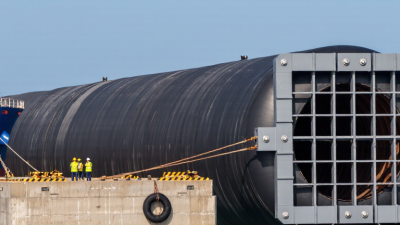
At Chinese commercial ports, cell rubber fenders are often installed where large vessels meet fixed quay walls. Their hollow, cylindrical body compresses under impact and helps absorb berthing energy. You may see them at container terminals, bulk cargo berths, and shipyards, where vessel size and approach speed can vary. The impact is uneven. A tug-assisted arrival feels different from a vessel coming alongside in a crosswind.
River ports and coastal terminals also use cell fenders at dolphins and exposed berthing points. Their circular shape can suit layouts with limited space, while a front panel helps spread contact across the ship’s hull. Steel chains and brackets keep the fender assembly in position. These details matter. Poor alignment can concentrate pressure, even when the rubber unit itself is correctly sized.
Selection should reflect vessel displacement, tidal range, berth structure, and expected contact speed. In China, a busy terminal may handle several vessel classes, so one design assumption rarely fits every berth. I would check installation drawings and maintenance access before specifying a system. It is easy to focus on energy ratings and overlook inspection. Rubber can age, and hardware can corrode. Regular checks help reveal damage, loose connections, or changes in compression before they affect daily operations.
Cell rubber fenders are made from carefully blended rubber compounds selected for resilience, weather resistance, and repeated compression. Technicians mix the ingredients until the batch is uniform, then shape the compound around a central cavity and reinforcing components. The uncured body is placed in a steel mold, where heat and pressure vulcanize it into a stable form. Curing time and temperature need close control; uneven curing can affect stiffness across the fender. Small defects matter. After demolding, workers trim excess rubber and inspect the surface, flange areas, and overall dimensions for cracks, voids, or uneven edges.
Testing checks whether a finished fender performs as designed, not merely whether it looks sound. A calibrated compression press applies a controlled load while instruments record deflection and reaction force. Results can be compared with the project’s specified performance range, including energy absorption and reaction force at defined compression levels. Inspectors may also check dimensions, rubber properties, and the condition of embedded steel parts. Keep records. Batch details, test conditions, and calibration dates make results more useful and traceable. One limitation deserves attention: a laboratory test cannot reproduce every berth, vessel impact, or aging condition. Field conditions should inform product selection, and unusual test results should prompt a closer review rather than a quick pass.
Cell rubber fenders are molded and cured before dimensional and material checks, followed by a compression test. This illustrative curve shows how reaction force and energy absorption may rise as the fender is compressed toward a rated deflection of 52.5%. Values are normalized to the rated test results; actual performance depends on the fender design and must be confirmed by its test report.
China’s cell rubber fender manufacturers and suppliers support busy ports, where reliable berthing equipment matters. UNCTAD’s Review of Maritime Transport 2024 reports that global container port throughput reached 858.9 million TEUs in 2023, a 2.4% rise from 2022. That figure signals growing activity, but it does not determine the right fender for every quay. Buyers should compare energy absorption, reaction force, and hull pressure under clearly stated test conditions. PIANC’s Fender Guidelines, Report of Working Group 33, offer a recognized reference for fender system design and selection. Small details matter.
Experienced suppliers should provide traceable material and production records, dimensional inspection results, and performance data for the proposed fender. Ask for batch-specific documentation, not only a general product brochure. Check the molded surface for visible cracks or voids, and confirm mounting-hole positions against approved drawings. A small mismatch can slow installation. Request information on rubber formulation, curing controls, and applicable aging or ozone-resistance tests. Third-party witnessed testing may add confidence for critical projects, though it cannot replace a careful review of specifications. A neat certificate can still leave questions. Clear answers about test methods, tolerances, and after-sales inspection support a more dependable supplier assessment.
| Evaluation Dimension | Technical or Procurement Data | What Buyers Should Verify |
|---|---|---|
| Fender Type | A cell rubber fender is a molded cylindrical fender with a central opening. It is commonly used as part of a marine berthing system. | Confirm the proposed fender type and installation arrangement match the berth design and vessel operating conditions. |
| Dimensions | Overall height, outside diameter, bore diameter, and mounting-face dimensions are selected to suit the project design. | Request dimensioned drawings and check hole positions, tolerances, clearances, and compatibility with existing structures. |
| Energy Absorption | Energy absorption is a design value determined by fender size, rubber formulation, deflection, and test conditions. | Compare the stated energy absorption with the project requirement and confirm the test method and rated deflection used. |
| Reaction Force | Reaction force is the force transferred through the fender to the supporting structure as the fender compresses. | Check that the quoted reaction force is compatible with the berth structure and is reported for the same conditions as the energy rating. |
| Rubber Compound | Fender performance depends on the rubber compound and its formulation. Compound properties should be specified in the technical documentation. | Ask for declared compound properties, applicable inspection criteria, and batch traceability for the supplied products. |
| Mounting System | Cell fenders may be installed with a frontal frame, chains, anchors, and associated hardware, depending on the design. | Confirm the complete bill of materials, hardware materials, anchor details, and installation drawings—not just the rubber body. |
| Face Panel | A steel frontal panel can distribute contact pressure over a larger area and may be fitted with a low-friction facing material. | Verify panel dimensions, steel grade, coating or corrosion protection, facing material, and connection details against the project specification. |
| Testing and Inspection | Inspection and performance testing should be defined by the purchase specification and agreed quality plan. | Request the inspection and test plan, test reports, acceptance criteria, and product identification records for the order. |
| Applicable Guidance | Marine fender-system design should follow the project’s specified design basis and applicable guidance. ISO 17357 is a standard for pneumatic rubber fenders, not cell rubber fenders. | Ask the supplier to identify the standards or design guidance applicable to the offered cell fender and confirm that they match the project requirements. |
| Drawings and Documentation | A technical submission typically includes product drawings, performance data, installation details, and inspection documentation. | Review the complete submission before approval and ensure that the final approved drawings correspond to the supplied configuration. |
| Delivery and Packaging | Packaging and handling arrangements should protect the rubber body, coatings, and hardware during transport and storage. | Confirm packing method, shipment dimensions, marking, storage instructions, delivery schedule, and responsibility for unloading. |
| Note: Cell fender dimensions and performance values are project-specific. Obtain verified drawings, rated performance data, and inspection records from the supplier for the exact configuration being considered. | ||
When evaluating Chinese cell rubber fender suppliers, compare engineering evidence, not catalog claims. PIANC MarCom Working Group 33’s 2002 Fender Guidelines calculate berthing energy from vessel mass and approach speed, with correction factors for site conditions. The basic relationship is proportional to velocity squared: doubling approach speed can quadruple energy. Ask each supplier to show how its selected fender meets your vessel’s design energy, permitted reaction force, and hull-pressure limits. Check that calculations state the assumed vessel displacement, berthing angle, and operating conditions.
Request dimensional drawings, rubber compound specifications, batch traceability, and test reports for the exact cell-fender model. Review energy absorption and reaction-force curves at the stated deflection, rather than relying on a single headline rating. Ask whether testing was conducted in-house or independently, and verify the test method and calibration details. Demand raw curves. A polished catalog can still hide gaps. A factory audit can reveal practical details: mold condition, steel-flange protection, curing records, and how defects are handled. These details matter, though an audit alone cannot prove long-term performance.
Compare quotations on a like-for-like basis, including anchors, installation guidance, inspection support, packaging, and lead time. Clarify how the supplier controls dimensions and rubber hardness between production batches; request recent inspection records. If possible, inspect a production sample and check its finish, flange alignment, and markings against the approved drawings. Do not treat the lowest price as proof of value. PIANC guidance helps frame design requirements, but the project engineer should confirm the final specification for the actual berth.