Leave Your Message

What Is a Cell Rubber Fender Used For?

A named expert quotation cannot be verified from the material provided, so this introduction does not invent an attribution. The practical question remains important: what is a Cell Rubber Fender used for, and how does it protect a working berth?

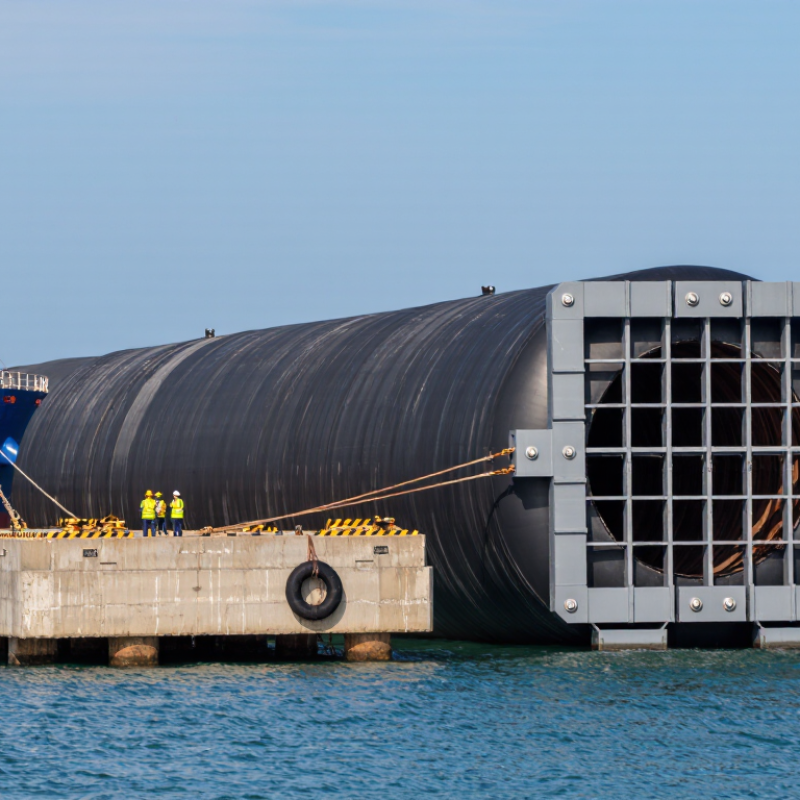
A Cell Rubber Fender is a large marine fender fitted to quay walls, terminals, and other berthing structures. Its hollow, cylindrical body compresses when a vessel makes contact. That deformation helps absorb berthing energy and reduces the force transferred to the ship and the structure. A steel frontal frame and low-friction facing are often added to spread contact pressure and let the hull slide more smoothly along the fender.

The details matter. Fender size, rubber grade, installation spacing, and vessel approach conditions all affect performance. A unit that looks substantial may still be unsuitable if its energy-absorption rating does not match the berth’s needs. Engineers therefore assess vessel displacement, approach speed, tide range, and allowable reaction force before selecting a system. Small differences count.

Cell fenders are valued for robust construction and predictable compression, but they are not maintenance-free. Inspectors should check rubber condition, anchor bolts, and frontal-frame components for wear or damage. Site conditions can change, too. A sound selection begins with real operating data, careful installation, and regular inspection—not appearance alone.
What Is a Cell Rubber Fender Used For?

What Defines a Cell Rubber Fender?

What Is a Cell Rubber Fender Used For?

What Defines a Cell Rubber Fender?

A cell rubber fender is a hollow, molded rubber unit that absorbs impact between a vessel and a quay. Its broad circular body compresses toward a steel mounting panel, while flanged ends secure it to the structure. The central cavity allows the rubber walls to deform and recover under load. This shape provides a compact footprint for repeated berthing impacts.

Its defining performance is the balance between energy absorption and reaction force, not appearance alone. PIANC’s 2002 Report of Working Group 33 calculates berthing energy using E = ½ M V², adjusted for factors such as eccentricity, added water mass, softness, and berth configuration. Vessel mass and approach speed can sharply change impact demand. The report’s method does not make one fender size suitable for every berth. Design checks should reflect the vessel, approach conditions, and allowable quay loads. Installation tolerances can also affect contact and load distribution—an easy detail to overlook.
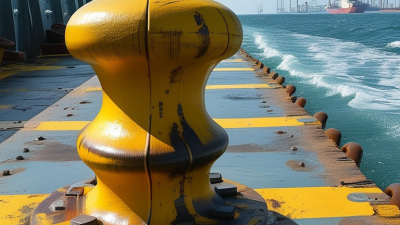
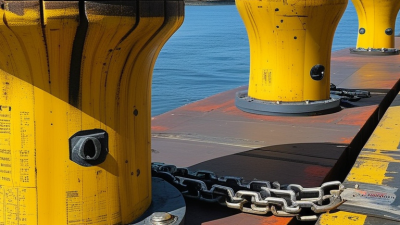
Tips: Compare certified force-deflection data with the project calculation. Inspect the face panel, anchors, and rubber for uneven wear or cracking. Keep records. A photo beside a ruler can help reveal gradual deformation. Don’t judge performance by size alone.

How Its Cell Structure Absorbs Impact Energy

A cell rubber fender protects quay walls and vessels during berthing. Its hollow, cylindrical body compresses when a ship presses against it. The rubber deforms, stores part of the impact energy, and releases it as the load eases. The broad front panel helps spread contact across the hull rather than concentrating force at one point. A controlled, gradual response matters.

PIANC’s 2002 Fender Guidelines assess berthing energy using vessel mass, approach speed, and correction factors. The basic kinetic-energy relationship is E = ½mv². This means doubling approach speed can quadruple the vessel’s kinetic energy, with other conditions unchanged. Real berthing calculations also account for how the vessel contacts the berth and how much energy the fender system can absorb. Small speed differences matter.

In practice, a cell fender’s rated energy absorption and reaction force must be checked at its specified deflection. Vessel size, berth layout, temperature, and installation affect performance. A fender that looks substantial may still be poorly matched to the site. Measurements and inspection matter. The rubber can age, and actual impacts rarely follow a perfect calculation. PIANC’s guidance provides a design framework, but site-specific engineering remains essential.

Where Cell Rubber Fenders Are Commonly Used

What Is a Cell Rubber Fender Used For?

Where Cell Rubber Fenders Are Commonly Used

Cell rubber fenders absorb berthing energy and help protect both vessels and harbor structures. Their compact, circular body suits quay walls, wharves, jetties, and dolphins. These locations often face repeated contact from working vessels, sometimes at changing tides or approach angles. UNCTAD’s Review of Maritime Transport 2024 reports that about 80% of global trade by volume moves by sea. That traffic makes dependable vessel-to-structure protection essential at busy ports.

Cell fenders are also used at bulk terminals, container berths, and service piers where sturdy, space-efficient protection is needed. The World Bank’s Container Port Performance Index 2023 covers 405 ports worldwide and evaluates port performance using vessel time in port. It does not measure fender performance, but it shows the scale and operational demands of modern port activity. A close fit matters. The fender’s size, rubber grade, panel arrangement, and anchoring should match vessel energy, tidal range, and wall strength. A fender can still be poorly suited if these conditions are overlooked.

Tips: Check the berth’s drawings and vessel data before selecting a cell fender. Inspect bolts and rubber regularly; cracks, looseness, or uneven wear deserve attention. Real berths are rarely perfect, so allow for installation tolerances.

How They Protect Vessels and Marine Structures

Cell rubber fenders protect vessels and marine structures by compressing when a ship comes alongside. Their hollow, cellular body deforms under pressure and absorbs part of the berthing energy. This reduces the force transferred to a quay wall, pier, or vessel hull. The rubber then recovers its shape after the load is removed. A tough contact panel can spread pressure across a wider area and help prevent direct contact with the fender body.

At a working berth, a fender may compress as a vessel arrives slowly, while its face panel slides against the hull. The system must be sized for factors such as vessel mass, approach speed, berthing angle, and available clearance. Local tidal range matters, too, because it changes where the hull meets the fender. Details matter. Poor alignment or loose anchor bolts can reduce protection, even when the rubber looks sound. Regular checks for cracks, deformation, worn panels, and corroded fixings help reveal problems early. A fender cannot prevent every impact; unusually hard contact can still damage the hull or supporting structure, so inspection findings should inform maintenance and operating practices.

What Is a Cell Rubber Fender Used For? - How They Protect Vessels and Marine Structures

Application How the Cell Fender Protects Common Arrangement Important Design Considerations
Quay walls and berths Compresses during berthing to absorb part of the vessel’s impact energy and limit the force transferred to the berth and hull. Mounted vertically on the quay, often behind a steel frontal panel with a low-friction facing pad. Vessel size, berthing speed and angle, tidal range, fender spacing, hull contact pressure, and the strength of the supporting structure.
Marine dolphins Provides a compliant contact point that helps cushion vessel approach and reduce direct impact on the dolphin structure. Fixed to the vessel-facing side of a dolphin, with a panel sized to distribute contact over an appropriate area. Vessel approach direction, expected energy, water-level changes, panel dimensions, and loads on piles or foundations.
Terminals handling large vessels Offers high energy-absorption capacity for its size when correctly selected and installed, helping manage berthing loads. Installed as a designed system with anchorages, chains or other restraints, and a frontal frame or panel as required. Energy absorption and reaction force must both be checked against vessel limits and structural capacity; values depend on the specific fender design and conditions.
Harbors with changing water levels Can serve over a range of vessel contact heights when the fender layout and panel coverage are designed for the site’s water-level variation. Positioned and spaced to maintain suitable contact with vessels at different tide or operating levels. Tidal range, vessel draft, quay geometry, fender elevation, and the risk of the hull contacting the structure outside the protected area.
Berths requiring a broad contact face Works with a frontal panel to spread contact load across a wider area than the rubber body alone, helping protect the vessel’s hull. A panel is fitted in front of one or more cell units; a suitable facing material may be added to reduce friction against the hull. Panel stiffness and size, hull shape, allowable surface pressure, sliding movement, and the condition of facing pads and fasteners.

Note: A cell rubber fender is a hollow, molded rubber fender commonly used at marine berths. Its energy absorption and reaction force vary with its design, rubber properties, compression, and operating conditions; selection should be based on a project-specific berthing assessment.

What Guides Fender Selection and Installation?

A cell rubber fender absorbs impact when a vessel comes alongside a quay or dolphin. Its hollow, cellular shape compresses under load, helping reduce force on both the vessel and the supporting structure. Selection depends on more than ship size. PIANC’s report, Guidelines for the Design of Fender Systems (MarCom WG33, 2002), identifies berthing energy, fender reaction, hull pressure, and operating conditions as key design considerations. Berthing energy calculations account for vessel mass and approach speed, among other factors. Small changes in speed matter.

Installation must match the design calculations. Engineers check the panel layout, fixing bolts, backing structure, and clearance for compression. They also consider tidal range, likely berthing angles, and whether a ship could contact the fender off-centre. UNCTAD’s Review of Maritime Transport 2024 notes that over 80% of global trade by volume moves by sea, underscoring the value of dependable port infrastructure. Still, a report cannot replace site measurements. Existing quay condition and local vessel behaviour can complicate an otherwise tidy design.

Tips: Confirm the fender’s rated energy absorption and reaction against the project design. Inspect bolt tightness and rubber condition during routine maintenance. Keep a clear record. That detail is easy to overlook.

What Is a Cell Rubber Fender Used For?

Cell rubber fenders absorb berthing energy and help protect both the vessel and the quay. The chart shows the calculated kinetic energy of a 10,000-tonne vessel at different approach speeds, using E = ½mv². These illustrative values are before design correction factors and are not fender capacity ratings.

Selection and installation: Check the design berthing energy, fender reaction force, hull pressure, vessel size, approach angle, tidal range, and available clearance. Confirm the fender and panel layout suits the quay structure, then install to the approved drawings with correctly specified anchors and secure, aligned connections.