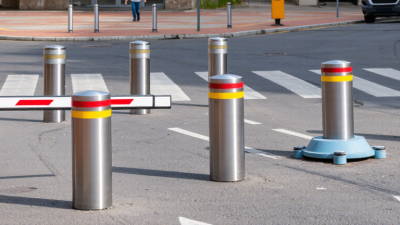
Why Choose Locking Bollards for Your Property?
Locking Bollards provide a practical way to control vehicle access while keeping an entrance usable when needed. They can help protect driveways, loading areas, private parking spaces, and pedestrian zones from unwanted vehicle entry. Picture a narrow service lane: during deliveries, authorized staff lower or remove the bollard; afterward, they secure it again. The exact process depends on the model. Some designs use a key-operated lock, while others rely on a removable section or a ground socket. Small details matter. A stiff lock or heavy post can make routine access frustrating.
Choosing the right option starts with the site, not the product photo. Consider the surface, available clearance, how often access changes, and who will operate the lock. Check the manufacturer’s installation guidance and material specifications, and ask a qualified installer to assess conditions such as drainage and paving depth. A bollard alone is not a complete security plan, and its performance depends on its design and installation. It may also need periodic cleaning and checks for wear, corrosion, or a jammed mechanism. That maintenance is easy to overlook. Think carefully about daily use: a barrier that staff avoid locking may offer less practical control than expected. The sections that follow examine the benefits, styles, installation considerations, and upkeep involved in choosing Locking Bollards for your property.
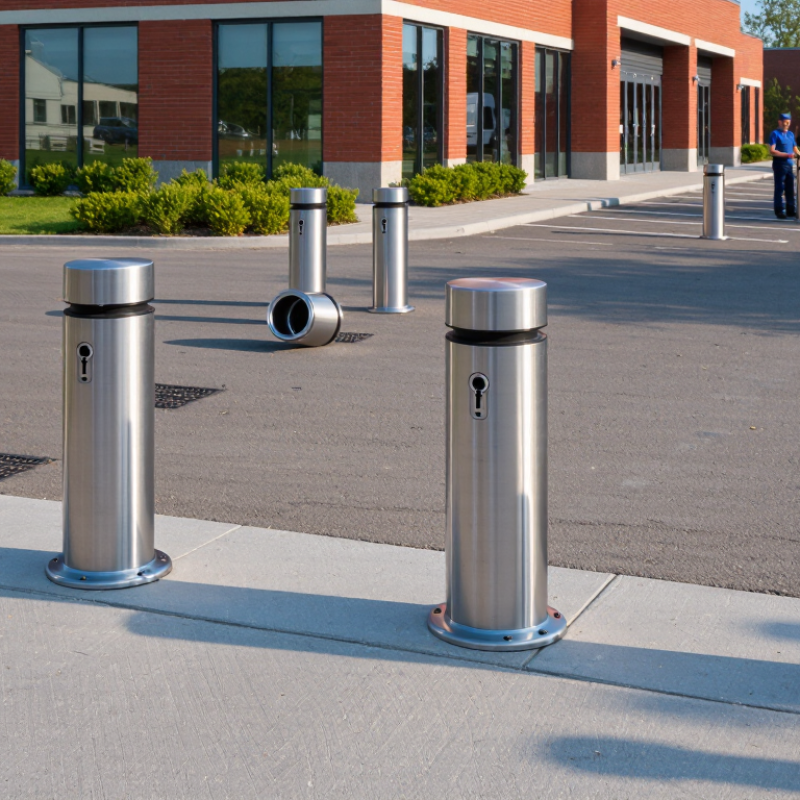
What Locking Bollards Are and How They Work
Locking bollards are short, strong posts that control vehicle access while leaving people room to walk. Unlike permanently fixed posts, many can be unlocked and removed when a driveway or service lane needs to open. Others hinge down and lie close to the ground. A simple barrier. Their visible height and spacing help drivers recognize the boundary before reaching it.
A removable model usually fits into a metal sleeve anchored in a concrete footing. A key-operated lock secures the post in place; some designs use a padlock or a concealed locking mechanism. To open the route, an authorized person unlocks the post, lifts it from the sleeve, and stores it safely. Fold-down versions release at the base and pivot aside. The exact steps vary, so check the product instructions rather than assuming every lock works alike.
Installation matters. The sleeve must sit securely, drain appropriately, and align with the intended vehicle path. Measure the opening with a vehicle in mind, not just an empty drawing; mirrors and turning space can be easy to overlook. A qualified installer can assess the surface and footing requirements. One practical drawback is that removable posts need a storage spot, and dirt can make a lock awkward to use. Small details, perhaps, but worth considering before choosing a system.
Why Choose Locking Bollards for Your Property? — What Locking Bollards Are and How They Work
| Bollard Type |
What It Is |
How the Locking Mechanism Works |
How Access Is Managed |
Common Applications |
Planning Considerations |
| Removable, socket-mounted |
A post that lifts out of a ground-level receiver installed in a prepared foundation. |
A lock, locking pin, or similar retention mechanism secures the post in the receiver. The exact mechanism varies by design. |
An authorized person unlocks the post, removes it, and stores it until access needs to be restricted again. |
Occasional vehicle access to pedestrian areas, service entrances, and private driveways. |
Plan for a suitable storage location and keep the receiver clear of dirt, water, and debris. Removal generally requires lifting the post. |
| Manual retractable |
A post that lowers into a below-ground housing and rises again when needed. |
A key-operated lock or release mechanism allows the post to be lowered or raised, depending on the model. |
An authorized user operates the lock and moves the post manually; some designs use a spring-assisted mechanism. |
Driveways, parking areas, and entrances where the post needs to remain in place but be lowered periodically. |
Check the required excavation depth, drainage provisions, and access to the housing for cleaning and maintenance. |
| Automatic retractable |
A powered post that moves into or out of a below-ground housing. |
An electric or hydraulic system operates the movement; access controls may include a key switch, card reader, keypad, or remote control. |
Authorized users activate the control system. Installation and operation should follow the manufacturer's safety instructions. |
Entrances with frequent vehicle movements or sites that need controlled access without manual handling. |
Requires power, suitable civil works, control-system planning, and regular inspection. Emergency access and safe operation should be addressed in the design. |
| Surface-mounted locking post |
A fixed-height post secured to a prepared surface rather than set into a deep ground socket. |
Depending on the design, a lock may secure a removable post to its mounting base or restrict removal of the fixing components. |
Access is controlled by the key or release arrangement provided with the specific model. |
Sites where excavation is limited, such as some paved areas or retrofit projects. |
Confirm that the existing surface and anchors are suitable for the intended use. Surface-mounted products are not automatically vehicle-impact rated. |
Selection note: A locking bollard can help control vehicle access, but its locking feature alone does not establish impact resistance. Check the product's stated performance, installation requirements, local accessibility and fire-access rules, and site conditions before specifying it.
How Locking Bollards Improve Property Security
Locking bollards help control where vehicles can enter, without blocking every pedestrian or delivery route. When raised, they create a visible physical boundary; when lowered, staff can open the lane for scheduled access. That daily control matters. A barrier only helps when people can operate it reliably and know who is authorized to lower it.
The Storefront Safety Council has cited U.S. estimates of about 60 vehicle-into-building crashes per day, with roughly 500 deaths and 4,000 injuries annually. These figures are estimates, not a prediction for any one property. Still, they show why protecting entrances, storefronts, and loading areas deserves attention. CISA’s vehicle-ramming mitigation guidance also emphasizes matching barriers to a site’s risks. Bollards should be positioned to protect likely approach paths while preserving emergency and accessible routes.
A locking model can suit a private driveway, service yard, or shared parking entrance where access changes throughout the day. Choose equipment with documented impact performance, and have a qualified installer assess its foundations, spacing, and operating needs. A strong post in weak concrete is not much protection. There is a trade-off: manual locks need staff attention, and forgotten keys or jammed mechanisms can delay access. Test them in real conditions, including rain and busy shift changes.
Common Types of Locking Bollards and Mechanisms
Locking bollards come in several practical forms. Removable models lift out of a ground sleeve and secure with a key or padlock. They suit driveways that need occasional full-width access, though storing a heavy post can be awkward. Retractable bollards lower into a below-ground housing; manual versions need no power, while hydraulic or electric models can operate from a control system. Fixed-locking designs stay upright but may include a locked access panel or removable section.
Mechanism choice affects daily use. A manual unit is simple, but repeated lifting can become tiring. Automatic systems offer faster access, yet require power, maintenance, and a reliable backup plan. For impact resistance, check independent test evidence rather than relying on appearance. ASTM F2656/F2656M-23 defines vehicle-impact test classes; its M30 classification uses a 15,000-pound vehicle travelling at 30 mph. This is a test condition, not a guarantee that every bollard meets that rating. Match the tested rating to the site’s actual risk.
Tips: Measure sleeve depth and check drainage before installation; standing water can make a locking mechanism stiff. Test the lock with gloves on, especially if staff will use it in rain or darkness. A detail easy to overlook.
Why Choose Locking Bollards for Your Property?
Common Types and Typical Power Requirements
Removable and manually retractable bollards are typically operated by hand. Automatic hydraulic and electromechanical bollards use powered mechanisms to raise and lower the bollard. Requirements vary by model and installation.
Where Locking Bollards Are Used on a Property
Locking bollards are useful wherever a property needs occasional vehicle access but a clear boundary the rest of the time. At a driveway entrance, they can help keep routine traffic out while allowing residents, staff, or deliveries through when needed. They also suit private parking bays and the approach to a garage, where a fixed post might obstruct daily movement.
Placement matters. On a larger property, bollards can separate parking areas from pedestrian routes, such as a path leading from a lot to an office entrance. Near loading zones, they can mark the edge of a service area without permanently closing it. A locked post may also protect landscaped courtyards or outdoor seating from accidental vehicle entry. Keep sightlines clear. People need to see the boundary before turning or reversing.
The right location depends on how vehicles actually move across the site. Check the turning space, pavement condition, and access needed by maintenance teams before installation. One detail is easy to miss: a bollard that protects a corner can still make a delivery awkward. That trade-off deserves a site walk, not just a glance at a plan. Locking models offer flexibility, but they still need regular checks to ensure the lock works smoothly and the post stays secure.
Key Factors to Consider Before Installation
Before choosing locking bollards, observe how vehicles and pedestrians move through the property.
A delivery van may need more turning space than a passenger car. Mark proposed positions with cones, then check sightlines from entrances, windows, and nearby walkways. Small shifts matter. Bollards placed too close together can obstruct maintenance vehicles or create awkward gaps for wheelchair users.
Check the ground before planning the installation. Paving may conceal utility lines, and thin concrete might not support an in-ground model. Confirm the required foundation and fixing method against the product specifications and site conditions. A qualified installer can assess uncertain surfaces.
Think about daily operation, too: who holds the keys, where removable units will be stored, and whether the lock remains reachable in rain or winter gloves. Dirt and standing water can make a simple mechanism frustrating. That detail is easy to underestimate.
Also consider vehicle clearance, drainage, lighting, and the property’s maintenance schedule. A layout that looks tidy on a drawing may feel cramped during a busy delivery. Check applicable local installation requirements before work begins.