Leave Your Message

What Are the Top 10 Types of Street Bollards for Buyers?

Choosing the right Street Bollards begins with understanding the space, not chasing the newest product. A busy shopping street needs different protection from a quiet residential lane. Vehicle weight, impact risk, pedestrian flow, maintenance access, and visual character all matter. Small details matter too. A bollard can guide traffic, protect a doorway, frame a plaza, or prevent careless parking.

Pedestrian-planning expert John J. Fruin wrote, “The pedestrian is the most vulnerable road user.” That reminder gives this buying guide a practical foundation. The ten types discussed here include fixed steel bollards, removable bollards, retractable models, automatic rising bollards, flexible posts, illuminated designs, decorative units, cast-iron styles, concrete bollards, and high-security products. Each option offers strengths, but none suits every project. Fixed bollards may provide dependable protection, while removable versions support occasional service access. Automatic models look efficient, yet they require power, inspection, and skilled maintenance. Flexible posts cost less, but they may offer limited protection against heavier vehicles.

A neat ranking can mislead. Price alone is not a reliable guide. Installation depth, drainage, visibility, coating quality, and replacement access deserve equal attention. Buyers should also review certified impact performance when meaningful vehicle resistance is required. Local accessibility standards and planning requirements still need checking. Real sites are rarely perfect. Uneven paving, poor lighting, or rushed placement can weaken an otherwise excellent design. This guide compares practical use, appearance, durability, safety value, and long-term ownership concerns. The aim is simple: help buyers choose Street Bollards that work clearly, age responsibly, and fit the people using the space.
What Are the Top 10 Types of Street Bollards for Buyers?

What Street Bollards Are and How They Support Urban Safety

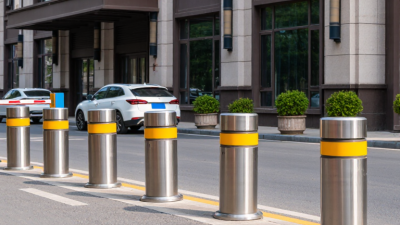
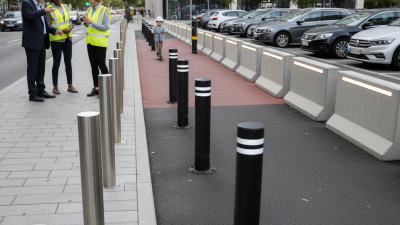
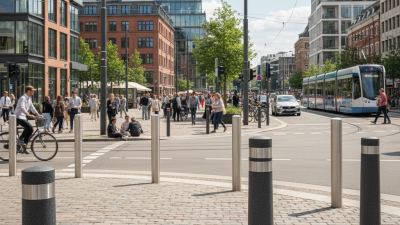
Street bollards are short, sturdy posts that guide movement and protect vulnerable urban spaces. They separate pedestrians from vehicles near sidewalks, plazas, transit stops, and building entrances. Their value is practical: they create a visible boundary before a driver reaches a crowded area.

The ten common types include fixed steel, removable, retractable, automatic, flexible, concrete, cast iron, illuminated, decorative, and high-security bollards. Each suits a different street condition. Fixed models provide constant protection, while removable posts support occasional access for maintenance. Flexible bollards can absorb minor impacts, but they may not withstand repeated vehicle strikes. Illuminated units improve nighttime visibility. High-security designs require careful engineering and professional installation. Placement matters as much as strength. A poorly spaced row can block wheelchairs, narrow delivery routes, or create a tripping hazard. That is an easy detail to miss.

Tips: Check the post’s material, foundation, visibility, spacing, and maintenance needs. Measure pedestrian clearance before installation. Use contrasting colors or reflective bands near crossings. Confirm that removable systems lock securely and operate smoothly. For automatic units, plan for power failure and manual access. Local engineers should review impact requirements and drainage conditions. A strong bollard is not automatically a safe choice. It can become an obstacle when selected without observing real street behavior. Field reviews, photographs, and feedback from pedestrians often reveal problems that drawings overlook.
The Main Differences Between Fixed, Removable, and Retractable Bollards

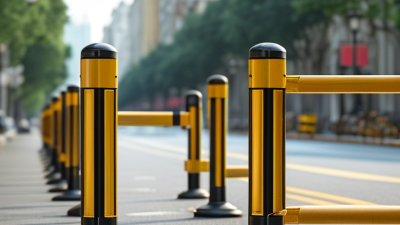
Choosing among the top 10 street bollard types starts with site behavior, not appearance. Fixed steel, stainless steel, cast iron, concrete, flexible, illuminated, removable, telescopic, manual retractable, and automatic retractable models serve different risks. Fixed bollards provide the strongest continuous barrier. They suit storefront edges, pedestrian zones, and loading areas where vehicle access must remain restricted.

Removable bollards use a ground socket and lifting key. They protect a space daily, yet allow emergency or maintenance access. However, workers must store and reinstall them correctly. That small task is often underestimated. Manual retractable bollards hide below pavement and preserve clear access without electrical controls. Automatic retractable units rise through hydraulic or electromechanical systems, offering faster access control but requiring drainage, power, inspections, and trained maintenance.

Performance matters more than visual weight. ASTM F2656 impact testing helps buyers compare tested resistance using vehicle mass, speed, and penetration ratings. For traffic context, the NHTSA Traffic Safety Facts: 2022 report recorded 7,522 pedestrian fatalities in the United States. This figure reinforces the need for carefully placed protection near crossings and busy entrances. Yet bollards cannot replace lighting, signs, visibility, and safe vehicle geometry. Buyers should check foundation depth, impact certification, corrosion exposure, accessibility clearances, and replacement procedures. A stronger bollard may still be the wrong choice if it blocks wheelchair movement or creates a maintenance hazard.

Ten Common Street Bollard Types and Their Typical Applications

Street bollards do more than block cars. They shape movement, protect edges, and show where vehicles must stop.

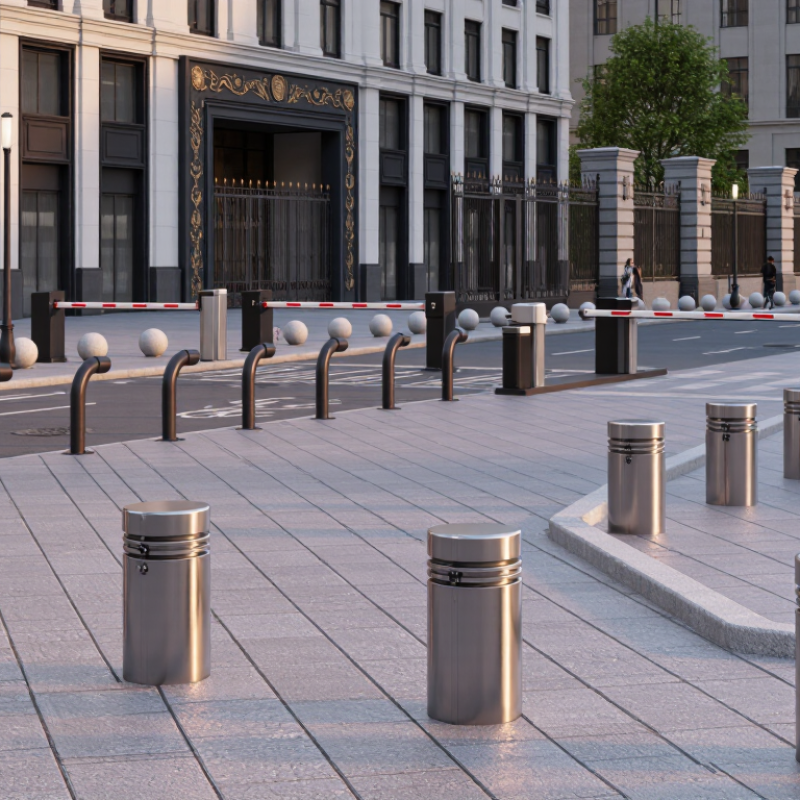
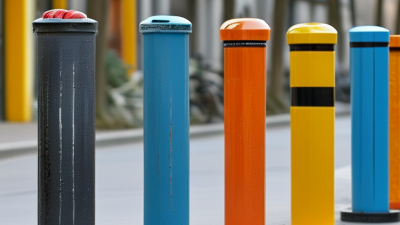
The FHWA’s 2022 Traffic Safety Facts recorded 7,522 pedestrian deaths in the United States. WHO’s Global Status Report on Road Safety 2023 estimates 1.19 million annual road deaths worldwide. These figures make placement decisions serious. Fixed steel bollards suit sidewalks, storefronts, and transit platforms. Removable steel units allow occasional service access. Manual retractable bollards support controlled entry at plazas. Automatic rising bollards fit civic spaces needing scheduled vehicle control. Flexible polymer bollards absorb minor strikes and suit lanes, curves, and temporary trials. Concrete bollards provide heavy, low-maintenance separation around public buildings.

Cast-iron bollards add heritage character to historic streets. Decorative posts guide pedestrians without making spaces feel defensive. Illuminated bollards improve edge visibility near paths, crossings, and parking areas. Anti-ram bollards protect higher-risk perimeters after an engineered threat assessment. NACTO’s Urban Street Design Guide stresses clear, legible pedestrian zones. Still, appearance can mislead. A decorative post may stop careless parking, but it cannot replace tested impact resistance.

Tips: Match the bollard to the threat, not only the streetscape. Check foundation depth, drainage, visibility, maintenance access, and removal procedures. Ask for independent crash-test evidence and installation drawings. ASTM F2656 can help compare vehicle-impact performance. Leave enough walking space. A site survey often reveals delivery paths that drawings miss. The best type changes with speed, vehicle weight, soil, utilities, and operating hours. A quick specification may need reconsideration.

What Are the Top 10 Types of Street Bollards for Buyers? - Ten Common Street Bollard Types and Their Typical Applications
Comparison of ten common street bollard types, their construction, security characteristics, installation methods, and typical applications.
Bollard Type Typical Construction Typical Height and Diameter Security or Impact Performance Installation and Operation Typical Applications
Fixed Steel Bollards Welded or seamless steel tube, often hot-dip galvanized, powder-coated, or stainless steel. Commonly 750–1,200 mm high and 100–220 mm in diameter. Provides a permanent physical barrier. Resistance depends on steel grade, wall thickness, foundation, and spacing. Set into a reinforced concrete foundation or mounted on a structural base plate. Building fronts, pedestrian zones, storefront protection, sidewalks, loading-area boundaries, and traffic-control points.
Removable Bollards Steel or stainless-steel post with a removable sleeve, locking pin, or concealed locking mechanism. Commonly 750–1,000 mm high and 100–200 mm in diameter. Can provide moderate to high protection when installed in a properly engineered socket; performance varies by design. Installed in a ground socket and removed manually with a key, lock, or lifting tool. Shared streets, emergency access routes, event areas, service entrances, and locations requiring occasional vehicle access.
Manual Retractable Bollards Heavy-duty steel or stainless-steel post guided by a sleeve, housing, or telescopic mechanism. Typically 600–900 mm high when raised; diameter often 100–220 mm. Offers controlled vehicle access with protection comparable to a fixed bollard when fully deployed, subject to design specifications. Raised and lowered by hand, usually with a key, handle, or lifting mechanism. Private streets, parking areas, courtyards, service lanes, and access points with periodic vehicle restrictions.
Automatic Rising Bollards Steel or stainless-steel telescopic cylinder operated by hydraulic, pneumatic, or electromechanical equipment. Commonly 500–900 mm high when raised; diameter often 160–275 mm. Available in standard traffic-control versions and higher-security models; certified impact ratings should be checked for critical sites. Installed below ground and controlled by access cards, remote controls, sensors, timers, or security systems. Restricted city-center roads, government facilities, commercial entrances, parking control, and high-security access points.
Flexible Polymer Bollards Impact-resistant polyurethane, recycled polymer, rubber, or flexible plastic with reflective bands. Usually 450–1,000 mm high and 80–200 mm in diameter. Designed to bend, deform, or rebound after a low-speed impact; generally not intended for stopping determined vehicle attacks. Surface-mounted with bolts or installed in shallow sockets; normally requires little maintenance. Lane separation, cycle lanes, traffic islands, temporary road layouts, parking guidance, and hazard marking.
Cast-Iron Decorative Bollards Cast iron or ductile iron with molded ornamental details; commonly painted or powder-coated. Commonly 750–1,100 mm high and 100–250 mm wide or in diameter. Provides visual and physical separation. Structural resistance depends on the casting, anchorage, and foundation. Usually permanently anchored or embedded; some designs are available with removable bases. Historic districts, public squares, parks, heritage streetscapes, shopping streets, and civic landscaping projects.
Concrete Bollards Precast or cast-in-place reinforced concrete, sometimes combined with a steel core or decorative cladding. Often 600–1,200 mm high; width or diameter commonly 250–500 mm. High mass provides strong passive resistance, although performance depends on reinforcement, anchorage, and foundation design. Installed as heavy permanent units, embedded sections, or precast elements fixed to a prepared base. Plazas, public buildings, transit areas, pedestrian streets, parks, and locations where heavy-duty passive protection is required.
Stainless-Steel Architectural Bollards Stainless-steel tube, frequently brushed, polished, or satin-finished; may include a carbon-steel structural core. Commonly 750–1,200 mm high and 100–200 mm in diameter. Suitable for pedestrian guidance and property protection; higher-security performance requires a reinforced internal structure and engineered foundation. Fixed, removable, or surface-mounted configurations are available. Corporate entrances, hotels, retail areas, waterfronts, transport hubs, hospitals, and modern urban streetscapes.
Illuminated Bollards Powder-coated steel, aluminum, stainless steel, or polymer housing with LED lighting and a translucent diffuser. Commonly 600–1,200 mm high and 100–250 mm wide or in diameter. Primarily provides visibility, wayfinding, and low-level separation; most standard lighting models are not crash-rated. Fixed to the ground with concealed electrical cabling, suitable drainage, and access for maintenance. Walkways, parks, campuses, plazas, parking areas, residential developments, and pedestrian routes requiring nighttime visibility.
Traffic and Utility Bollards Galvanized steel, painted steel, or heavy-duty polymer; may include reflective strips, signage, or protective hoops. Typically 750–1,200 mm high and 75–200 mm in diameter. Provides visual guidance and protection for infrastructure; impact resistance ranges from light-duty to heavy-duty depending on construction. Surface-mounted or embedded; generally fixed, although temporary versions may use weighted or portable bases. Fire hydrants, utility cabinets, gas meters, charging equipment, warehouse approaches, road edges, and parking-control areas.

Note: Dimensions and performance levels are typical market ranges rather than universal specifications. Buyers should verify local accessibility, visibility, drainage, foundation, electrical, and vehicle-impact requirements before selection.

How to Compare Bollard Materials, Designs, Visibility, and Protection Levels

Choosing among the top ten street bollard types starts with site conditions, not appearance. Common options include fixed steel, stainless steel, cast iron, aluminum, plastic, flexible, retractable, removable, illuminated, and decorative bollards. Each material changes strength, maintenance, weight, and cost. Steel usually suits vehicle protection, while aluminum works better where light handling matters. Plastic and flexible models improve guidance but may offer limited impact resistance. Check wall thickness, anchor depth, drainage, and corrosion protection before comparing prices.

Design affects daily use. Fixed bollards provide constant separation, but removable models allow service access. Retractable units save space, although their mechanisms need regular inspection. Illuminated versions improve nighttime visibility when wiring is protected. Reflective bands, contrasting colors, and adequate spacing help drivers notice rows during rain or low light. Decorative shapes can support streetscape goals, yet sharp edges and poor sightlines create avoidable concerns. Small details matter.

Protection levels should come from tested impact data, installation drawings, and supplier documentation. Do not judge safety by weight alone. A heavy bollard with weak anchoring may perform poorly. I have seen attractive installations fail because the pavement was unsuitable or the spacing was inconsistent. That experience makes comparison less tidy than a simple product table. Consider delivery access, cleaning tools, replacement parts, and inspection time. The cheapest option can become expensive when damaged repeatedly.

What Are the Top 10 Types of Street Bollards for Buyers?

Comparison of typical street bollard types by protection level, visibility, and maintenance demand. Ratings use a 1–5 scale, where 5 represents the highest level.

How to read the chart: Fixed steel, concrete, cast iron, and automatic rising bollards generally provide the strongest vehicle protection. Stainless steel and illuminated bollards offer high visibility, while flexible plastic and timber bollards are typically selected for lower-impact traffic control or streetscape applications. Maintenance ratings indicate expected maintenance demand, with 5 requiring the most regular attention.

Key Installation, Maintenance, Accessibility, and Purchasing Considerations

What Are the Top 10 Types of Street Bollards for Buyers?

Buyers commonly compare ten forms: fixed, removable, retractable, automatic rising, telescopic, flexible, illuminated, decorative, anti-ram, and telescoping bollards. Each type suits a different street condition. Fixed steel units work well beside loading zones, while removable models support seasonal access. Automatic systems need power, drainage, controls, and emergency access planning. Flexible bollards reduce vehicle damage but offer limited security. Anti-ram designs require certified crash testing, not attractive appearance alone.

Installation should begin with a utility survey, pavement assessment, and pedestrian-flow review. The 2010 ADA Standards require an accessible route at least 36 inches wide. They also recommend 60-inch passing spaces at intervals not exceeding 200 feet. Keep bollards aligned, visible, and outside the clear route. A small placement error can catch a wheelchair wheel or obstruct a stroller. The U.S. Access Board’s 2023 PROWAG guidance deserves review, although local adoption may differ.

Maintenance plans should record impact damage, corrosion, loose anchors, lighting failures, and drainage blockages. Inspect high-risk sites after storms and vehicle contact. For hostile-vehicle protection, ASTM F2656/F2656M-23 evaluates vehicle mass, impact speed, and penetration distance. ISO 22343-1:2023 provides related security-barrier testing guidance. Ask for full test evidence, foundation details, replacement costs, and servicing intervals. Cheap bollards are not always economical. A neat specification can still fail in real rain, poor soil, or crowded pedestrian traffic.