
In 2026, choosing a bollard is about more than stopping vehicle access. The locking mechanism, installation surface, and daily use all matter. A bollard beside a shop entrance may need to move often, while one protecting a loading bay may stay raised for long periods. Small differences can shape the right choice.
This guide introduces common types of Locking Bollards, including removable, fold-down, telescopic, and automatic models. Each works differently. Removable designs lift out of a ground socket; fold-down units hinge toward the pavement; telescopic bollards retract into a below-ground housing. Automatic models rise and lower using powered controls. Details matter. Look closely at how each model locks, how much clearance it needs, and whether its housing suits the site.
We’ll also consider practical factors such as traffic frequency, drainage, surface construction, visibility, and maintenance access. For example, a narrow pavement may leave little room for a hinged unit, while a recessed model may require careful planning below ground. These are useful starting points, not universal answers. Product specifications vary, and installation conditions can change the recommendation. It is easy to focus on appearance and overlook routine servicing. That can be a costly mistake. A site assessment and guidance from a qualified installer can help confirm which option fits the location and its intended use.
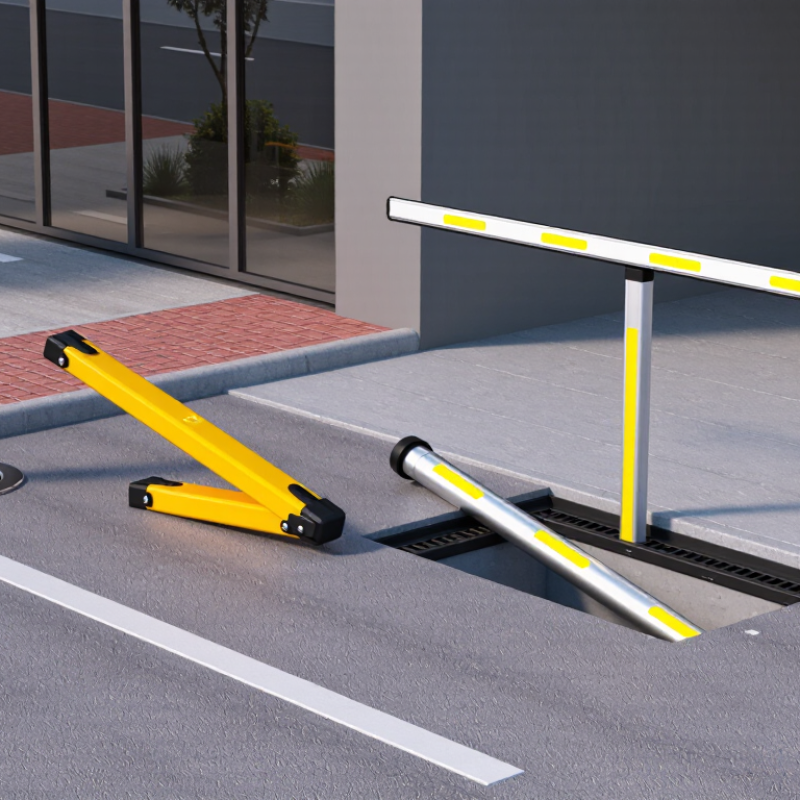
Locking bollards generally fall into three categories: manual, removable, and powered.
Manual models rise or retract with a key, handle, or internal locking mechanism. They suit sites with occasional vehicle access, such as a service entrance used a few times each day. The mechanism is straightforward, but staff need room and time to operate it. Cold weather or grit can make a neglected lock stubborn.
Removable bollards lift out of a ground socket, leaving a clear opening when access is needed. They work well where openings change seasonally or deliveries are infrequent. Check the socket depth, drainage, and storage location before installation; a heavy post is awkward to carry.
Powered systems use electric or hydraulic mechanisms for frequent, controlled access. They can fit busy entrances, but need a dependable power supply, routine inspection, and a plan for outages. Power changes everything. A manual release may be essential, yet it should be reachable without exposing staff to moving traffic.
Match the system to how often the opening is used, who will operate it, and what maintenance the site can actually support. The neatest option on a drawing may not be the easiest one to live with.
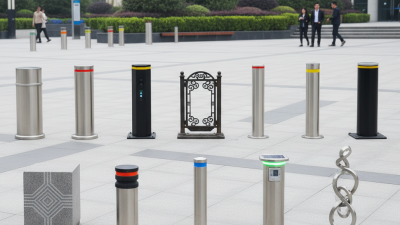
Removable bollards with keyed socket locks offer flexible access control without leaving a permanent obstacle in the way. A bollard lifts from a ground sleeve when authorized access is needed, then locks back into place afterward. This can suit shared driveways, service entrances, and parking areas where vehicle access changes throughout the day. The key-operated mechanism is simple, but it depends on a clean, well-aligned socket. A little grit can make removal harder than expected.
Installation details matter. The sleeve needs a stable base and careful positioning, so the bollard sits upright and does not wobble under normal contact. Check the opening routine with the people who will use it: where will the removed post be stored, and who keeps the key? Small oversights can create daily friction. No setup is perfect.
Tips: Keep the socket cover in place when the bollard is removed, and inspect the lock for dirt or moisture. Test the key periodically, rather than waiting for a busy morning. Choose a design whose post weight and removal method suit the actual users; a heavy bollard may be secure, yet awkward to handle repeatedly.
| Bollard type | How access is controlled | Power and operation | Best suited to | Key considerations |
|---|---|---|---|---|
| Removable bollard with keyed socket lock | A key releases the bollard from a ground socket so it can be lifted out when access is needed. The socket remains in the ground when the bollard is removed. | Manual; no electrical supply is needed. | Driveways, service entrances, pedestrian areas, and other locations where access is restricted at some times but must be opened fully at others. | Plan a secure place to store the removed bollard. Keep the socket clear of dirt and debris, and confirm that the bollard can be handled safely by the intended users. |
| Removable bollard secured with a padlock | A padlock secures a retaining feature, such as a chain or locking tab, to deter unauthorised removal. | Manual; no electrical supply is needed. | Occasional access control where a simple, visible lock is suitable. | The padlock is exposed to weather and may need maintenance. Its security depends on the lock, attachment design, and installation. |
| Fold-down locking bollard | The bollard pivots down to open the route and is held upright by a lock, commonly a key-operated lock or padlock arrangement. | Manual; remains attached to its base while lowered. | Parking bays and driveways where the bollard can lie flat without obstructing vehicles or pedestrians. | Check ground clearance, hinge area, and the lowered bollard’s position. It does not provide the same fully clear opening as a removable bollard. |
| Manual retractable bollard | The bollard is raised or lowered by hand and may use a key-operated lock to secure its position. | Manual; the bollard retracts into a below-ground housing. | Locations needing a clear surface when access is granted while keeping the bollard in place. | Requires below-ground space and suitable drainage. Housing maintenance and site conditions should be considered during installation. |
| Automatic rising bollard | An access-control system, such as a credential reader or authorised control station, commands the bollard to rise or retract. | Powered; actuator and control equipment are required. The exact system depends on the installation. | Frequent or managed vehicle access at sites that need controlled, repeatable operation. | Requires power, controls, planned maintenance, and an appropriate response for power loss or emergencies. Installation is more involved than for manual types. |
| Fixed bollard with a separate access opening | The bollard itself does not unlock or move; access is provided through a nearby gate or another controlled opening. | No power is needed for the fixed bollard. | Perimeters where vehicle access is not required through the bollard line itself. | Provides no flexible opening at the bollard location. Coordinate the fixed layout with the separate access point. |
Selection note: Bollard dimensions, materials, lock design, security performance, and installation requirements vary by product and site. Confirm vehicle access needs, ground conditions, drainage, accessibility, and applicable local requirements before specifying a system.
Drop-down bollards store horizontally in a ground-level chamber when access is needed. An authorized user releases the locking mechanism, lowers the post, and secures it inside the recess. The roadway stays clear. No motor, wiring, or powered control is required, which can simplify installation in locations without convenient electrical access.
The chamber needs careful placement and routine attention. Leaves, grit, standing water, or winter ice can interfere with movement or prevent the cover from sitting flush. A drainage path and a clean, accessible lock matter as much as the visible post. Check the hinge, locking points, and surface around the lid during regular inspections. Small problems are easier to spot early.
These bollards suit sites where access changes occasionally, rather than repeatedly throughout the day. A person must lower and raise each unit, so several posts can make a routine opening slower than expected. The lifting effort also deserves a practical check before selection; a wet or heavy post may be awkward for some users. It is tempting to treat ground-level storage as maintenance-free. It is not. Choose the chamber depth and post height for the actual vehicle and pavement conditions, then test the operation on site.
What Are the Top Types of Locking Bollards in 2026?
Automatic rising bollards control vehicle access by retracting into the ground when passage is authorized. Their drive system affects response speed, maintenance needs, and site suitability. Hydraulic models use pressurized fluid to raise and lower the bollard. They are often chosen for frequent operation or heavier-duty access points, where steady movement matters. A pump unit, valves, and buried pipework support each cycle. This arrangement can provide strong lifting force, but it requires checks for leaks, fluid condition, and wear. In freezing or dusty settings, enclosure design and drainage deserve close attention. Small details matter.
Electromechanical systems use an electric motor and mechanical transmission, often a screw or gear assembly, to move the post. They can simplify fluid-related servicing and suit sites with moderate traffic or limited plant-room space. Performance still depends on motor sizing, duty cycle, and protection against water ingress. A busy entrance may expose an underspecified unit to heat buildup or slower recovery. That can be overlooked. Before choosing, compare expected vehicle movements, available power, local climate, and technician access. Ask how the bollard behaves during a power loss and whether manual lowering is practical. The fastest option is not always the best fit. A site survey can reveal drainage slopes, cable routes, and clearance problems that drawings may miss. Both technologies need competent installation and documented maintenance; the right balance depends on the site.
Automatic Rising Bollards: Hydraulic and Electromechanical Drive Types
Hydraulic drives use pressurized fluid and are often selected for demanding, frequent-duty installations. Electromechanical drives use an electric motor and mechanical transmission, and can suit sites where a hydraulic power unit is undesirable. Scores are a qualitative comparison of typical design characteristics, not standardized test results; actual performance depends on the bollard model, installation, and operating conditions.
Crash-Rated Options: ASTM F2656-20 M30, M40, and M50 Classes
For sites needing vehicle-impact resistance, a locking bollard’s crash rating matters more than its appearance. Under ASTM F2656-20, M30, M40, and M50 identify tests using a medium-duty vehicle at nominal speeds of 30, 40, and 50 mph. A higher speed means a more demanding test, not automatic protection in every real-world scenario. Check the complete test designation, including its penetration rating, rather than relying on the M-class alone. Small details matter.
A crash-rated locking bollard must match the tested configuration. Foundation depth, concrete strength, bollard spacing, and surrounding ground can affect performance. A retractable or removable design may suit a driveway that needs regular access, but its locking mechanism does not establish crash resistance by itself. The rating applies to the specific tested assembly and installation conditions. Even a strong bollard can disappoint if the site differs from the test setup.
Tips: Ask for the ASTM F2656-20 test report and confirm the vehicle class, impact speed, and penetration result. Have a qualified site professional review soil, foundations, access needs, and installation drawings before choosing M30, M40, or M50. Leave room for practical realities: drainage, maintenance access, and occasional installation compromises deserve careful review.